
 1300 735 077
Outdoor Blinds With Side Tracks: Do They Really Block Wind in Melbourne Homes?
Alfresco Blinds Co
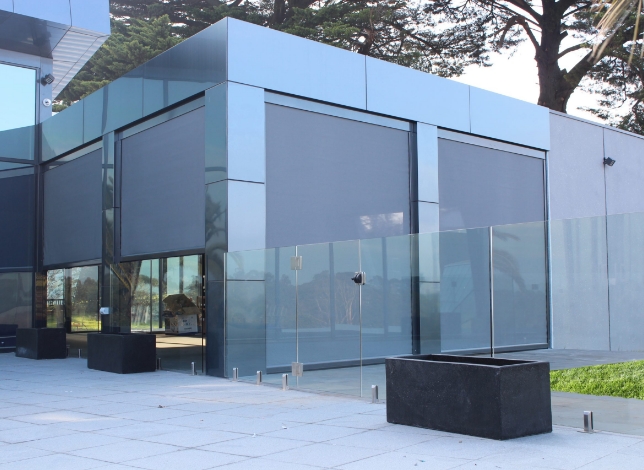
Outdoor blinds with side tracks are fast becoming the go-to shading solution for Melbourne homeowners who want genuine wind and rain protection, not just a decorative screen. Unlike standard café blinds that flap and billow in a stiff southerly, track-guided systems lock the blind panel securely into side channels. This prevents fabric movement, seals out draughts, and extends outdoor living time well beyond the mild-weather months. Furthermore, the variety of systems on the market, from the cord-free Ziptrak to the motorised Zipscreen, means there is a genuinely engineered solution for almost every alfresco space in Melbourne.
This guide covers everything in one place. So whether you are enclosing a pergola, wrapping a rooftop balcony, or protecting a patio from the notorious Melbourne four-seasons-in-one-day weather, you will leave with a clear picture of which system suits your space, your budget, and your lifestyle.
How Side Track Systems Actually Work
The core idea behind any track-guided outdoor blind is straightforward. A blind panel, whether PVC, mesh, or blockout fabric, is fitted with a beaded or zip edge along both sides. Those edges slot into a narrow aluminium channel fixed to the wall, post, or beam on each side of the opening.
When the blind drops, the edge bead stays inside the channel at all times. As a result, the panel cannot swing outward or flap in the wind. Additionally, the channel creates a near-continuous contact seal along the side of the blind, significantly reducing air infiltration compared to a free-hanging café blind. The bottom bar then rests on the ground, a sill, or a tensioner strip to close off the lowest gap.
Importantly, this design means the fabric remains under lateral control at every point during its travel. Consequently, track-guided systems handle wind far better than any rope-tensioned or pelmet-only alternative. They are also considerably safer, since there are no loose cords or ropes to become a hazard around children or pets.
“The key advantage of a side channel system is that wind load is distributed along the full length of both tracks, rather than being concentrated at a single fixation point. This dramatically reduces stress on both the fabric and the frame.” — Alfresco Blinds Co. Installation Team
Moreover, the channelled design allows the blind to be raised or lowered to any position without needing to be fully open or fully closed. Therefore, homeowners get precise control over ventilation, shade, and privacy at any given moment.
Why Melbourne Weather Makes This Relevant
Melbourne’s climate is genuinely unpredictable in ways that matter for outdoor shading. The Bureau of Meteorology records an average of around 48 days annually in Melbourne where wind gusts exceed 60 km/h, and coastal suburbs and elevated properties experience considerably more exposure than that figure suggests.
Verified Climate Data
According to the Bureau of Meteorology, Melbourne’s prevailing south-westerly winds regularly produce gusts between 50 and 80 km/h during spring and early summer storm events. Track-guided outdoor blind systems are specifically engineered to remain stable in sustained wind conditions that would cause standard café blinds to billow or detach.
Beyond wind, Melbourne’s UV index regularly reaches the “Extreme” category during summer. Furthermore, sudden rain events can arrive with very little warning. A track-guided outdoor blind installed on an alfresco area therefore serves three simultaneous functions: wind barrier, rain deflector, and UV shield.
Additionally, Melbourne homeowners increasingly want year-round outdoor living spaces rather than seasonal-use patios. Track-guided systems, combined with an outdoor heater and good lighting, make this genuinely achievable. Consequently, demand for outdoor blinds in Melbourne has grown sharply as homeowners invest in maximising every square metre of their property.
Finally, for properties in bushfire-affected zones around outer Melbourne, the AS 3959 Construction in Bushfire Prone Areas standard should always be referenced when selecting outdoor enclosure systems. Always consult your installer and local council for compliance advice in these zones.
Ziptrak, eZip and Zipscreen: What Actually Sets Them Apart
Three system names appear repeatedly in conversations about track guided outdoor blinds across Melbourne renovation forums, and for good reason. Each represents a distinct engineering approach. They share the core concept of a zip-edge panel inside aluminium side channels, but they diverge significantly in mechanism, pricing, span capability, and ideal application.
Understanding the differences before you purchase saves you from paying a premium for a feature you do not need, or conversely from buying a basic system that falls short of your actual requirements.
Ziptrak: The Spring-Balanced Standard
Ziptrak is a patented Australian product. Its defining feature is a spring-balanced roll mechanism that holds the blind at any height without locks, cleats, or external cords. You simply pull the bottom bar down or push it up, and the spring holds it in place. This makes Ziptrak exceptionally easy to operate one-handed.
The system is well-suited to domestic patios and pergolas where manual operation is preferred. Ziptrak panels are also available in motorised form for those who want remote or smart home control. Furthermore, Ziptrak is widely regarded as a benchmark for residential track-guided blinds in Australia due to its clean aesthetics and reliable spring mechanism. For more detail, visit our Ziptrak blinds page.
eZip: The Budget-Conscious Alternative
eZip operates on a similar zip-channel principle but uses a more conventional winding mechanism rather than a spring balance. This generally places it at a lower price point than Ziptrak. However, the crank or strap operation is slightly less intuitive for casual day-to-day use.
Despite this, eZip systems are a genuinely capable option for homeowners who want the core benefits of a track-guided system without the Ziptrak price tag. They are also a practical choice for commercial installations, such as restaurant alfresco areas, where staff operate the blinds regularly and manual cranking is acceptable.
Zipscreen: The Motorised-First Premium System
Zipscreen is engineered from the ground up for motorised operation. Its tensioned side channels and robust bottom bar handle larger spans than most domestic Ziptrak installations, making it a strong contender for wide commercial openings or oversized residential alfresco areas. The motorised drive is central to its design rather than an add-on.
Moreover, Zipscreen systems integrate readily with home automation platforms. Consequently, they suit homeowners who are already investing in smart home technology or who want their outdoor blinds to respond automatically to wind or sun sensors. Their premium positioning also reflects a more substantial aluminium extrusion profile, which contributes to long-term structural rigidity.
Side-by-Side System Overview (General Characteristics)
| Feature | Ziptrak | eZip | Zipscreen |
| Operation | Spring balance (hand-push) | Crank / strap | Motorised (primary) |
| Motorisation | Optional add-on | Optional add-on | Built-in standard |
| Typical Max Width | ~5.5 m | ~5.0 m | ~6.0 m+ |
| Best For | Domestic patios | Budget residential or commercial | Large spans or smart homes |
| Relative Price | Mid to premium | Entry to mid | Premium |
Note: Specifications above represent general industry characteristics as of mid-2026. Always confirm exact capabilities with your supplier, as product specifications may vary between manufacturers and distributors. Prices are indicative only. Request a site-specific quote for accurate pricing.
To explore which system suits your Melbourne home, our team at Alfresco Blinds Co. offers free measure and quote consultations.
PVC vs Mesh: Choosing the Right Fabric for Your Outdoor Blind
Once you have decided on your preferred track system, the next major decision is fabric type. This choice shapes how much light you get, how well you can see out, how effectively rain is blocked, and how the space feels when the blind is down.
Clear PVC Panels
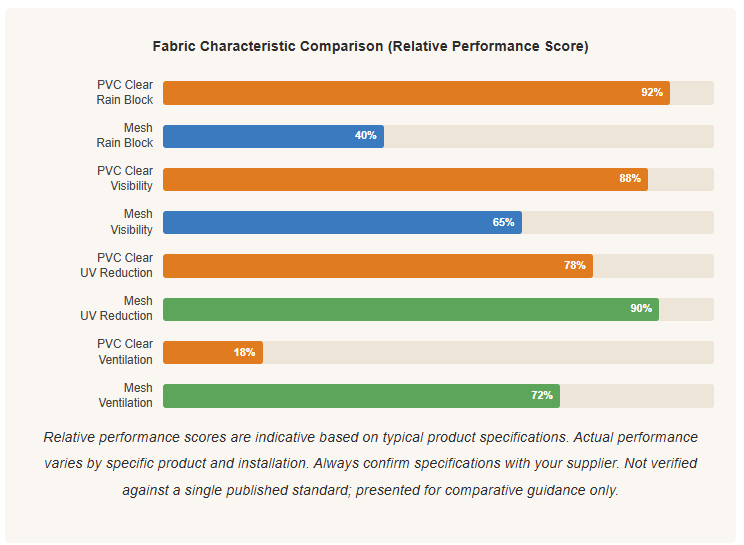
Clear PVC is the closest thing to a glass wall without the structural engineering cost. It delivers the highest rain resistance of any outdoor blind fabric, since the panel itself is essentially a solid sheet with minimal permeability. Furthermore, PVC maintains a virtually unobstructed view to the garden or surroundings when the blind is down.
However, PVC clear panels can trap heat in summer, creating a greenhouse effect in an enclosed alfresco space. They are also more susceptible to yellowing and stiffening over time if not maintained properly. High-quality UV-stabilised PVC significantly reduces this degradation. Therefore, always check the UV stabilisation specification before purchasing.
PVC panels are ideal for Melbourne homeowners who want maximum weather sealing during cooler or rainy months but still value the feeling of an open, light-filled space. They also work exceptionally well for year-round alfresco dining areas where food and conversation need rain protection.
Mesh and Open-Weave Fabrics
Mesh fabrics are woven from UV-resistant polyester or PVC-coated yarns. Their open weave allows air to pass through, which keeps the alfresco area cooler and avoids the greenhouse effect associated with solid PVC. Additionally, quality mesh fabrics offer UV reduction figures of up to 90%, making them highly effective sun shields during Melbourne’s intense summer days.
The trade-off is rain resistance. Mesh fabrics deflect light rain and reduce wind-driven spray, but they are not designed to block heavy downpours. Consequently, mesh is better suited to sun and wind protection than it is to rain enclosure. For Melbourne homes where afternoon heat and westerly winds are the primary concern, mesh is often the preferred choice.
Blockout and Solid Fabrics
Blockout fabrics eliminate light, heat, and privacy concerns simultaneously. They are common choices for bedrooms with outdoor blind enclosures, entertainment spaces requiring afternoon shade, or patios where privacy from neighbouring properties is important. Obviously, they also eliminate the view when closed. Nevertheless, for specific applications they are difficult to match.
Visit our outdoor blinds product page to explore the full range of available fabrics and colours.
Motorisation for Track-Guided Outdoor Blinds in Melbourne Homes
Motorisation transforms an already practical product into a genuinely effortless one. Rather than manually raising or lowering each panel, a motorised system responds to a wall switch, a remote control, or a command from your smartphone. For large alfresco areas with multiple blind panels, this difference in daily convenience is significant.
Most leading track systems in Australia, including Ziptrak, eZip, and Zipscreen, are compatible with established motor brands such as Somfy and similar precision tubular motors. These motors sit inside the headbox roller and are essentially invisible from the outside.
Control Options Available Today
- Wall-mounted switch: Simple and reliable. Operates like a light switch.
- Handheld remote: Controls individual blinds or groups from anywhere on the property.
- Smartphone app: Useful for properties where the blinds are frequently adjusted or where remote operation is needed.
- Wind and sun sensors: Automatically retract blinds in high winds and deploy them in strong sun. These are particularly relevant for Melbourne’s unpredictable weather.
- Smart home integration: Compatible systems link to platforms such as Google Home or Apple HomeKit for voice and automation control.
Industry Reference
According to the Australasian Window and Curtain Industry Association, motorised outdoor blinds and awnings are among the fastest-growing segments in the Australian residential shading market, driven by smart home adoption and lifestyle investment in outdoor living spaces.
Wind sensors deserve special mention for Melbourne homeowners. A sensor-equipped motorised blind can detect gust speeds above a set threshold and automatically retract the blind before damage occurs. This is especially useful for exposed properties near Port Phillip Bay, elevated northern suburbs, or open-plan blocks where wind exposure is high.
For those exploring motorised options, our dedicated motorised blinds page details the full range of drive options and control systems we install across Melbourne.
Using Track-Guided Blinds on Pergolas and Patios Across Melbourne
Track-guided outdoor blinds are among the most versatile pergola enclosure solutions available to Melbourne homeowners. Unlike fixed glass or polycarbonate screens, they retract fully when not needed, preserving the open, airy feel of a pergola during fine weather. Moreover, they deploy quickly when a weather change requires it.
Pergola applications typically involve three or four blind panels, one for each open side of the structure. Importantly, the track posts can be fixed to existing pergola columns, retaining walls, or freestanding posts purpose-built for the blind system. This flexibility means that almost any existing Melbourne pergola structure can be retrofitted with track-guided outdoor blinds without a structural rebuild.
Patio applications differ slightly in that the blind often spans between the wall of the house and a freestanding post or fence. In these cases, the track must be securely anchored at both ends to handle wind loads without flexing. Consequently, post sizing and footing depth matter, and a professional measure and quote process should assess these factors before installation.
Our team installs pergola blinds across Melbourne daily, and we can advise on the most suitable track system and fabric combination for your specific structure, orientation, and wind exposure.
The Removable Post System
Some Melbourne homeowners prefer a removable post outdoor blind system, where the freestanding side posts can be disassembled and stored during seasons when the blind is not needed. This suits properties with seasonal use requirements, rental properties, or owners who prefer a completely open outlook in summer.
However, removable post systems require careful engineering to ensure they are stable when deployed. The post footing anchor must still be robust enough to handle Melbourne wind loads, even though the post itself is removable. Therefore, this system should always be installed by an experienced professional rather than as a DIY project.
For properties with very specific structural or aesthetic constraints, our team can also discuss café blinds in Melbourne as a complementary or alternative approach where track installation is not feasible.
Installation, Wind Performance, and Long-Term Durability
Professional installation is not optional for track-guided outdoor blinds. It is essential. The performance of the entire system depends on the accuracy of track alignment, the rigidity of post or wall fixings, and the correct tensioning of the fabric panel within the channels. A misaligned track will cause the zip edge to bind, skip, or wear prematurely. Furthermore, an inadequately anchored post will flex under wind load, defeating the purpose of the track entirely.
Wind Rating Considerations
Australian outdoor blind and awning products are tested against wind resistance standards relevant to local conditions. However, it is critically important to understand that no outdoor blind is designed for use in extreme storm or cyclonic conditions. Track-guided systems are engineered to handle the regular wind events typical of Melbourne suburban environments, not to serve as structural storm shelters.
Standards Reference
The Standards Australia framework includes relevant provisions for wind-exposed outdoor structures under AS/NZS 1170.2 (Wind Actions). Outdoor blind and awning systems used in exposed Melbourne locations should be specified and installed with reference to the wind region and local terrain category applicable to the site. Always consult your installer regarding site-specific wind compliance.
Most quality domestic track-guided systems perform well in sustained winds up to approximately 60 to 80 km/h when correctly installed and when the motorised wind sensor is calibrated correctly. Beyond this, manufacturers typically recommend retracting the blind. Consequently, wind sensor integration is a genuinely worthwhile investment for Melbourne properties with high exposure.
Frame and Fabric Durability
Quality track-guided outdoor blind systems use powder-coated aluminium extrusions for frames and tracks. Powder coating is highly resistant to Melbourne’s coastal and UV-intense environment, provided the coating specification is appropriate for outdoor exposure. Additionally, marine-grade fixings are recommended for properties within a few kilometres of Port Phillip Bay or the Melbourne coast.
Fabric durability depends heavily on the specific product and its UV stabilisation level. High-quality PVC or mesh fabrics used in leading systems carry expected lifespans of ten years or more under normal Melbourne conditions, with proper maintenance. However, cheaper imported fabrics may degrade significantly faster. Therefore, always ask for the specific fabric’s UV resistance rating and expected lifespan when comparing quotes.
For more on the engineering principles behind blind and window covering systems, Wikipedia provides a solid general reference.
What Do Outdoor Blinds With Side Tracks Cost to Install in Melbourne?
Pricing for track-guided outdoor blinds varies considerably based on panel size, fabric choice, system type, motorisation, and the complexity of the installation. For this reason, any specific figure quoted without a site measure should be treated as a broad starting point rather than an accurate estimate.
Price Transparency Notice — Indicative Figures Relevant to Mid-2026
The price ranges below are broad indicative figures relevant to the Melbourne market as of mid-2026. They are intended to help homeowners budget and compare, not to serve as fixed quotes. Actual installed costs vary significantly by supplier, product quality, site conditions, and project scope. Always request a formal, site-measured quote before committing to any purchase.
Manual track-guided blind (single panel, mid-grade fabric): Approximately $800 to $1,400 installed.
Motorised track-guided blind (single panel, quality fabric): Approximately $1,500 to $3,000+ installed.
Full pergola enclosure (three to four panels, motorised): Approximately $5,000 to $12,000+ installed, depending on size and specification.
These figures reflect the broader Melbourne market and should be compared against formal quotes from licensed installers. Factors that increase cost include larger panel sizes, premium fabrics, complex installation structures, and the addition of wind or sun sensors. Conversely, simpler manual systems on standard domestic structures tend to sit at the lower end of the range.
For accurate outdoor blinds pricing in Melbourne specific to your property, contact our team for a free measure and quote.
Maintenance and Long-Term Care for Track-Guided Outdoor Blinds
Track-guided outdoor blinds are robust, but they do require periodic care to perform well over their expected lifespan. Fortunately, maintenance routines are straightforward and require no specialist tools or products.
Routine Cleaning
Clean fabric panels two to four times per year, or more frequently in dusty or pollen-heavy environments. Use a soft cloth or sponge with a solution of mild dish soap and warm water. Rinse gently with a garden hose set to low pressure. Avoid high-pressure washers directly on zipper channels, as this can force grit into the seal and accelerate wear.
For PVC clear panels, use a dedicated PVC cleaner or a diluted solution of mild soap. Avoid abrasive cloths or solvents, which can scratch or cloud the panel surface. Additionally, applying a UV protectant spray to PVC panels after cleaning helps slow the yellowing process.
Track and Zipper Maintenance
Inspect the aluminium tracks seasonally for debris, bird nesting material, or accumulated grit. Clean tracks with a damp cloth and a soft brush. Lubricate the zipper edge and channel seals annually using a silicone-based lubricant. Avoid petroleum-based lubricants, which can degrade certain fabric coatings over time.
Check all structural fixings annually for signs of corrosion or loosening, particularly after a severe Melbourne winter storm season. Tighten any loose fixings promptly, as movement in the frame accelerates wear on both the track and the fabric edge.
Motorised System Care
Motorised systems require minimal additional maintenance. However, test the wind sensor calibration at the start of each season to confirm it triggers at the expected wind speed. Keep the motor housing free of moisture ingress by checking the weatherseal condition on the headbox annually.
If you notice unusual sounds, resistance during travel, or unexpected stopping, have the system inspected by a qualified installer before continuing to operate it. Early intervention prevents minor issues from becoming expensive repairs.
Maintenance and Long-Term Care for Track-Guided Outdoor Blinds
Track-guided outdoor blinds are robust, but they do require periodic care to perform well over their expected lifespan. Fortunately, maintenance routines are straightforward and require no specialist tools or products.
Routine Cleaning
Clean fabric panels two to four times per year, or more frequently in dusty or pollen-heavy environments. Use a soft cloth or sponge with a solution of mild dish soap and warm water. Rinse gently with a garden hose set to low pressure. Avoid high-pressure washers directly on zipper channels, as this can force grit into the seal and accelerate wear.
For PVC clear panels, use a dedicated PVC cleaner or a diluted solution of mild soap. Avoid abrasive cloths or solvents, which can scratch or cloud the panel surface. Additionally, applying a UV protectant spray to PVC panels after cleaning helps slow the yellowing process.
Track and Zipper Maintenance
Inspect the aluminium tracks seasonally for debris, bird nesting material, or accumulated grit. Clean tracks with a damp cloth and a soft brush. Lubricate the zipper edge and channel seals annually using a silicone-based lubricant. Avoid petroleum-based lubricants, which can degrade certain fabric coatings over time.
Check all structural fixings annually for signs of corrosion or loosening, particularly after a severe Melbourne winter storm season. Tighten any loose fixings promptly, as movement in the frame accelerates wear on both the track and the fabric edge.
Motorised System Care
Motorised systems require minimal additional maintenance. However, test the wind sensor calibration at the start of each season to confirm it triggers at the expected wind speed. Keep the motor housing free of moisture ingress by checking the weatherseal condition on the headbox annually.
If you notice unusual sounds, resistance during travel, or unexpected stopping, have the system inspected by a qualified installer before continuing to operate it. Early intervention prevents minor issues from becoming expensive repairs.
Frequently Asked Questions About Outdoor Blinds With Side Tracks
What is the difference between Ziptrak, eZip and Zipscreen blinds?
Ziptrak uses a patented spring-balanced mechanism that holds the blind at any height without cords or locks. eZip is a similar zip-channel system at a lower price point, using a manual crank or strap. Zipscreen is a premium motorised-first system designed for larger spans and smart home integration. All three use the same core principle of a zip-edge panel inside aluminium side channels.
Do outdoor blinds with side tracks actually stop wind and rain?
Track-guided systems significantly reduce wind penetration compared to free-hanging blinds, because the side channels prevent the fabric from billowing or lifting. They also deflect moderate rain effectively, especially with PVC clear panels. However, no outdoor blind system is designed to withstand severe storm or cyclonic conditions. Retract blinds during extreme wind events.
Are track-guided outdoor blinds worth the extra cost over standard ones?
For Melbourne homeowners seeking year-round alfresco use, the answer is generally yes. The additional wind stability, weather resistance, and ease of operation justify the higher price for most exposed patios and pergolas. For very sheltered or occasionally used spaces, simpler options may suffice.
Can side track outdoor blinds be motorised?
Yes. Most leading track systems including Ziptrak, eZip and Zipscreen support motorisation. Control options range from wall switches and handheld remotes to smartphone apps, wind sensors, and full smart home integration.
What is the maximum width you can cover with one track blind?
Most domestic systems handle spans up to approximately 5.5 to 6 metres per panel. Wider openings typically require multiple panels or a purpose-engineered commercial-grade system. Always confirm the maximum span for your chosen system with your installer.
Do outdoor blinds with tracks let in draughts at the top or bottom?
Quality systems minimise gaps significantly. Some minor air movement can occur at the header seal or around the bottom bar in strong gusts. Proper installation and correct fitting substantially reduce this. Ensure your installer checks header and bottom bar seals as part of the installation process.
Which is better for a windy Melbourne backyard: café blinds or track blinds?
Track-guided blinds outperform café blinds in windy conditions. The side channels prevent fabric movement, which is the primary failure mode of café blinds in gusty conditions. For Melbourne backyards with regular wind exposure, a track system is the more practical long-term choice.
Can you still see through outdoor blinds with side tracks when they are down?
Yes, if you choose a mesh or clear PVC fabric. Mesh allows a filtered view through the weave. Clear PVC provides near-full visibility. Blockout or solid fabrics will obstruct the view completely. Discuss your visibility preferences with your installer when selecting fabric.
How do you clean and maintain track-guided outdoor blinds?
Wipe fabric panels with mild soap and warm water two to four times per year. Clean tracks with a damp cloth and soft brush. Lubricate zipper seals with silicone lubricant annually. Avoid high-pressure washers on zipper channels. Check structural fixings after severe weather events.
Are outdoor blinds with tracks suitable for second-storey balconies in Melbourne?
Yes, but elevated locations experience higher wind loads. Your installer must assess the specific wind exposure and confirm that the chosen system’s wind rating suits the location. Wind sensor integration is particularly recommended for exposed upper-level installations.
Do track-guided outdoor blinds require a council permit in Melbourne?
Standard blind installations typically do not require a planning permit in Melbourne. However, if the blind is attached to a new structure, is in a heritage overlay, or forms part of a larger alfresco enclosure project, checking with your local council before installation is strongly recommended.
What happens to track-guided blinds during a Melbourne hailstorm?
Most manufacturers recommend retracting track-guided blinds during hailstorms, since hail impact can damage fabric panels regardless of fabric type. Motorised systems with weather sensors can be programmed to retract automatically when rain intensity or wind exceeds set thresholds.
Can I install outdoor blinds with side tracks myself?
While some basic systems are marketed as DIY-friendly, professional installation is strongly recommended for all track-guided outdoor blind systems. Correct track alignment, structural fixing depth, post footing engineering, and motorisation wiring all require expertise to perform safely and correctly. Incorrect installation voids most manufacturer warranties.
Conclusion: Making the Right Choice for Your Melbourne Alfresco Space
Outdoor blinds with side tracks are genuinely one of the most practical investments a Melbourne homeowner can make in their outdoor living space. They deliver the wind resistance, rain deflection, UV protection, and visual flexibility that standard hanging blinds simply cannot match in Melbourne’s demanding and changeable climate.
Whether you choose the intuitive spring balance of Ziptrak, the budget-accessible eZip, or the wide-span motorised capability of Zipscreen, the core benefit remains the same: a channelled system that keeps your blind panel stable, your alfresco space protected, and your outdoor lifestyle uninterrupted by a southerly buster or an unexpected afternoon shower.
Furthermore, the combination of quality fabric selection, professional installation, motorisation with wind sensing, and simple routine maintenance means that a well-chosen system will serve your home reliably for a decade or more. Consequently, the upfront investment repays itself through consistent outdoor living enjoyment across every Melbourne season.
The next step is straightforward: get a site-measured quote from an experienced Melbourne outdoor blind specialist who can assess your specific structure, orientation, wind exposure, and lifestyle requirements. That conversation will clarify your best system choice far more accurately than any online guide can.
 Previous

Follow Us on Instagram
