 1300 735 077
Exterior Window Shades: Smart Outdoor Shading Solutions for Melbourne Homes in 2026
Alfresco Blinds Co
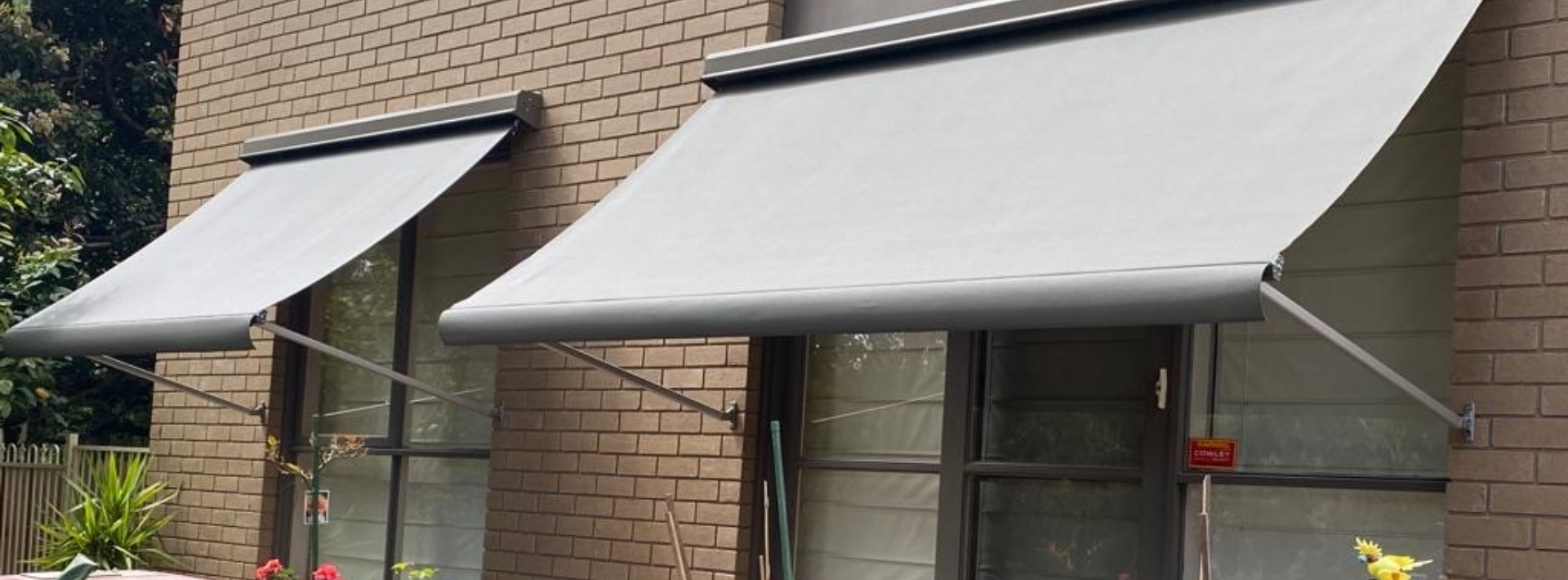
Quick answer: Exterior window shades are outdoor shading systems — including outdoor roller blinds, patio blinds, retractable awnings, and track-guided systems like Ziptrak — installed on the outside of a window or opening to block heat, UV radiation, wind, and rain before they enter your living space. For Melbourne homeowners dealing with intense summer sun, sudden southerly changes, and year-round entertaining pressure, the right exterior shading solution transforms how you use and feel your home. If you are ready to explore options, our outdoor blinds and awnings page is the best place to start.
If there is one upgrade Melbourne homeowners consistently underestimate, it is the impact of quality exterior window shades on comfort, energy bills, outdoor usability, and the overall liveability of a home. Unlike internal blinds that trap heat inside the glass layer, external shading intercepts solar radiation before it ever reaches the window — reducing heat load by up to 90% on exposed facades, according to the Australian Government’s energy efficiency resources.
Melbourne’s climate makes external shading not a luxury but a practical necessity. Summers regularly deliver days above 38°C. Wind shifts can arrive without warning. Outdoor entertaining areas are central to how Melbourne families live — and exposed patios, pergolas, and alfresco zones need to be functional across every season, not just the mild months.
At Alfresco Blinds Co, Melbourne’s family-run outdoor shading specialists based in Epping, we have spent over 12 years designing and installing shading solutions across the city — from Ziptrak blinds and folding arm awnings to motorised retractable systems and café blinds. This guide walks you through every option clearly, honestly, and without the jargon — so you can make a confident, well-informed decision.
| 3,000+ Blinds installed across Melbourne | 60+ Years of combined team experience | 100 Melbourne locations serviced | 5 Year Warranty on all installations |
What Are Exterior Window Shades — and Why Do Melbourne Homes Need Them?
The term “exterior window shades” covers a broad family of products: any shading system installed on the outer face of a window, wall opening, or outdoor structure. The defining characteristic is placement — external, not internal — which is what gives them their performance advantage.
When sunlight hits an internal blind or curtain, the heat has already passed through the glass and is now trapped inside your room. When an exterior shade intercepts that same sunlight before it reaches the glass, that heat dissipates outdoors. For a west-facing Melbourne living room in January, that difference can mean the distinction between a comfortable afternoon and an unbearable one — with or without air conditioning running.
Beyond thermal performance, exterior window shades deliver:
- UV protection — reducing fading of furniture, flooring, and artwork from prolonged solar exposure
- Privacy — controlling sight lines from the street or neighbouring properties without closing off natural light entirely
- Weather protection — shielding windows and outdoor spaces from wind, rain, and driving weather
- Outdoor living extension — converting an exposed alfresco or patio into a usable space across more months of the year
- Kerb appeal — adding architectural definition and a finished look to your home’s exterior
In Melbourne’s regulatory environment, most residential external shading systems do not require a building permit, but it is always worth checking with your local council for larger structures or heritage overlays. The Victorian Planning Authority provides guidance on residential exterior modifications.
How to Shade a Window on the Outside — Your System Options Explained
Melbourne homeowners have more options than ever when it comes to external shading. The right system depends on your opening type, exposure level, privacy requirements, and whether you want manual operation or full motorisation. Here is a practical breakdown of every major category.
Outdoor Roller Blinds and Ziptrak Blinds
Outdoor roller blinds remain the most versatile and widely used external shading solution across Melbourne’s alfresco areas, patios, and pergolas. They roll up neatly when retracted and drop down to enclose a space when needed. The key variables are fabric type (mesh, PVC, or blockout), guide system, and drive mechanism.
Ziptrak blinds take the outdoor roller blind concept and elevate it through a patented side-track system. The fabric zips into a channel on both sides, preventing fabric flap, eliminating gaps at the edges, and creating a far tighter seal against wind and insects. For Melbourne’s coastal and exposed suburban homes, that side-track containment is a significant practical advantage over unguided drop systems.
Ziptrak systems can be operated manually with a spring-balanced mechanism — requiring minimal force even on large drops — or motorised through smart home integration. They are available in a wide range of fabrics including textilene mesh, commercial-grade PVC, and blockout materials sourced from suppliers including Outlook by Ricky Richards, Zepel Fabrics, and HVG.
Zipscreen Blinds — Facade and Window-Focused Shading
Zipscreen blinds are a tension-guided system designed specifically for window openings and building facades rather than large open patio spans. The fabric is tensioned within side channels using a wire or rigid guide, producing a flat, architectural profile that integrates cleanly with the home’s exterior design. Zipscreen is particularly popular on contemporary Melbourne homes where a flush, minimal aesthetic is a priority.
The choice between Ziptrak and Zipscreen is largely one of application: Ziptrak suits wide alfresco enclosures and pergola bays; Zipscreen suits individual window openings and tighter architectural reveals. Both can be motorised. Both are available in mesh fabrics that preserve views while cutting UV significantly.
Café Blinds and Bistro Blinds
Café blinds are a practical, cost-effective solution for outdoor dining areas, entertainment zones, and semi-enclosed patios. Typically constructed from clear or tinted PVC panels supported by a rope-and-eyelet or zip system, café blinds provide weather protection while maintaining outward visibility — hence their popularity in Melbourne’s hospitality sector and now increasingly in residential alfresco areas.
Bistro blinds operate on the same principle with a more refined finish — often featuring cleaner hardware and a tighter tracking system. Ezip blinds represent a premium step up, using a side-channel tracking system similar to Ziptrak for a more sealed and polished outcome on café-style openings.
PVC Outdoor Blinds and Patio Blinds
PVC outdoor blinds and patio blinds are workhorses in the Melbourne market — durable, waterproof, easy to clean, and highly effective at blocking wind and driving rain. Standard PVC comes in clear or tinted finishes. The clear panels allow light penetration while forming a solid wind barrier; tinted options reduce glare and add privacy without sacrificing too much luminosity.
For Melbourne households that want maximum weather protection at a straightforward price point — particularly on covered pergolas and verandahs — PVC patio blinds remain one of the most practical decisions available. Materials from trusted suppliers such as MK Fabrics and Shaw Fabrics are used across Alfresco Blinds Co’s installations to ensure UV stability and longevity in Melbourne’s variable conditions.
Window Awnings Melbourne — Fixed and Retractable Options Compared
If outdoor roller blinds are the answer for full enclosure, window awnings are the answer when you want overhead shade above a window or doorway without fully enclosing the space. Melbourne’s window awning market broadly divides into two categories: fixed systems and retractable systems.
Fixed Awnings and Canopy Awnings
Fixed awnings — including traditional canvas awnings, aluminium canopy awnings, and straight drop systems — are permanently mounted above a window or door opening and provide consistent shade year-round. They require no operation: shade is always present when the sun is in range. The trade-off is inflexibility — you cannot retract them when winter sun is welcome, and they require periodic fabric replacement as canvas and coated fabrics age under Melbourne’s UV exposure.
Canvas awnings remain a popular choice for heritage and period-style Melbourne homes where the traditional aesthetic is part of the streetscape. High-quality canvas sourced from suppliers like Warwick Fabrics and Hoad Fabrics offers good UV resistance and colour stability when properly maintained and retreated every few years.
Retractable Awnings Melbourne — Folding Arm and Drop Arm Systems
Retractable awnings give you the flexibility that fixed systems lack. They extend when shade is needed and retract when you want open sky — a major advantage in Melbourne where winter sun is valuable. The two dominant retractable awning types for residential use are folding arm awnings and drop arm awnings.
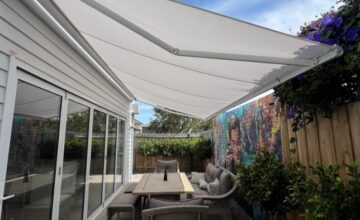
Folding arm awnings project outward from a wall-mounted head box using articulated arms that fold when the awning retracts. They are ideal above outdoor entertainment decks, spas, and large patio areas where vertical posts would be obstructive. Projection widths of three to five metres are common in Melbourne residential installs. Most quality folding arm awning systems are compatible with wind sensors and smart home automation for motorised retraction.
Drop arm awnings mount above a window and project out at an angle, dropping to a lower point at the outer edge to increase shade angle. They are particularly effective above west and north-facing windows where low-angle afternoon sun is the primary problem. Drop arm awnings are a common and practical solution across Melbourne’s established suburban housing stock.
Pivot arm awnings work similarly but use a pivoting mechanism for the arm projection — offering a slightly different geometry that suits certain building configurations better than a folding arm solution.
Wire Guided Awnings — Sleek and Minimal
Wire guided awnings use tensioned stainless steel cables instead of rigid side tracks or arms to guide the fabric as it extends and retracts. The cables are nearly invisible, keeping the profile clean and architectural — a popular specification in contemporary Melbourne homes where exposed hardware would interrupt the façade design. Wire guided systems suit narrower window openings and recessed architectural reveals particularly well.
Exterior Shading Systems at a Glance — Quick Comparison for Melbourne Homeowners
| System | Best For | Weather Seal | Motorisation | Privacy |
|---|---|---|---|---|
| Ziptrak Blinds | Alfresco, pergola, large openings | Excellent | Yes | High (PVC) / Medium (mesh) |
| Zipscreen Blinds | Windows, facades, architectural homes | Very Good | Yes | Medium to High |
| Folding Arm Awnings | Decks, entertaining areas | Low (Overhead sun shade only) | Yes | Low (overhead shade) |
| Drop Arm Awnings | West/north-facing windows | Moderate | Optional | Medium |
| Café Blinds / PVC | Patios, dining areas, verandahs | Good to Excellent | Optional | Low (clear) / High (tinted) |
| Canvas Awnings | Heritage homes, fixed shading | Moderate | Optional | Low (overhead) |
| Wire Guided Awnings | Architectural windows, reveals | Good | Yes | Medium to High |
| Outdoor Roller Blinds | General patios and pergolas | Good | Optional | High (blockout |
Motorised Outdoor Blinds and Awnings — What Melbourne Homeowners Need to Know
Motorisation has become the default specification for many Melbourne homeowners installing motorised outdoor blinds or motorised retractable awnings. The reasons are straightforward: motorised systems are more convenient to operate, more likely to actually be used regularly, and can be integrated with wind sensors, timers, and smart home systems for hands-free automation.
For wide Ziptrak or Zipscreen installations across large alfresco openings, manual operation of multiple blinds simultaneously becomes impractical. A single switch — or a voice command through a smart assistant — that closes all blinds simultaneously before a storm or opens them at a set morning time transforms the daily experience of your outdoor space.
Motorised retractable awnings fitted with wind sensors are a particularly sound investment for Melbourne’s exposed entertaining areas. The sensor detects wind speeds above a safe threshold and automatically retracts the awning — protecting the fabric and mechanism from damage during the sudden gusty conditions Melbourne regularly produces.
Alfresco Blinds Co installs auto sunblinds and fully automated outdoor shading across Melbourne, with all motorised systems backed by our 5 Year Warranty. Our team’s 60+ years of combined industry experience ensures every motorised installation is wired, calibrated, and tested correctly from day one.
Energy Efficiency and UV Protection — the Case for Exterior Shading in Melbourne
One of the most well-supported benefits of exterior window shades is their impact on household energy consumption. The Australian Government’s Energy Rating program consistently highlights external shading as among the most cost-effective passive cooling strategies available to Australian homeowners.
Internal blinds and curtains — even quality blockout options — allow solar heat to pass through glass before attempting to reflect or absorb it. By that point, radiant heat is already inside the room. An exterior blind, awning, or shade system prevents that radiation from reaching the glass in the first place, which is why external shading outperforms internal shading for thermal control in almost all modelled scenarios.
For UV protection specifically, outdoor mesh fabrics — including sunscreen roller blind materials from suppliers such as Blindware and Bricos Group — are engineered to block between 90% and 99% of UV radiation while maintaining outward visibility. This protects not just occupants from skin exposure but also furniture, flooring, artwork, and cabinetry from the accelerated fading that direct UV causes over time.
On a practical level, Melbourne homeowners who install quality external blinds or awnings on north and west-facing windows consistently report reduced air conditioning reliance during summer and lower peak energy demand in the late-afternoon period — which is precisely when Melbourne’s grid is under the most pressure.
Maintenance and Longevity — Keeping Your Outdoor Shading System in Peak Condition
Quality exterior window shades are designed to perform outdoors for years — but longevity depends on appropriate maintenance. Melbourne’s combination of UV intensity, coastal salt air (in bayside suburbs), summer dust, and autumn leaf matter means outdoor shading systems accumulate grime faster than internal equivalents.
General Maintenance Schedule
- Monthly: Inspect for debris accumulation in tracks, channels, and roller housings. Clear dried leaves and dirt from Ziptrak channels to prevent fabric abrasion.
- Quarterly: Wipe down fabric surfaces with a mild soap solution and soft brush. Rinse thoroughly. Do not use harsh chemical cleaners on coated outdoor fabrics.
- Annually: Inspect all mechanical components — springs, motors, arms, and guide cables — for wear. Lubricate pivot points and arm joints on folding arm and drop arm awnings as per manufacturer guidance.
- Every 3–5 years: Consider professional inspection of motorised systems and wiring. Canvas awning fabrics may require retreatment or re-proofing for water resistance.
Alfresco Blinds Co’s installations include a 5 Year Warranty and post-installation support, giving Melbourne homeowners confidence that any mechanical or operational issues are covered. Our team services all major shading system types across the 100+ Melbourne locations we operate across.
For general fabric care guidance, the Blind Manufacturers Association of Australia (BMAA) publishes useful maintenance references for residential window covering systems.
What Can I Cover Windows With Instead of Blinds? Exploring Shutter and Screen Alternatives
Not every Melbourne home suits a roller blind or awning approach. Some homeowners prefer a harder, more permanent shading solution — and the options available have expanded significantly in recent years.
Aluminium Outdoor Plantation Shutters
Aluminium outdoor plantation shutters provide one of the most durable, low-maintenance, and visually refined external shading solutions available. Powder-coated aluminium louvres are adjustable, weather-resistant, and will not warp, crack, or fade under Melbourne’s UV conditions the way timber alternatives do over time. They are particularly effective on west-facing windows and covered alfresco openings where both privacy and ventilation are priorities.
For coastal Melbourne locations where salt-air corrosion is a concern, marine-grade powder-coated aluminium ensures the hardware and louvres remain completely rust-resistant, outperforming traditional external materials.
Security Shutters
Security shutters combine external shading with an additional layer of property security — a growing consideration for Melbourne homeowners in both inner and outer suburban locations. Modern security roller shutters are available in perforated and solid profiles; the perforated variants allow air circulation and limited vision while providing a significant deterrent to unauthorised access.
Louvred Roof Systems and Retractable Roofs
For homeowners wanting to upgrade their alfresco or patio to a year-round living space, louvred roof systems and retractable roofs represent the premium tier of external shading infrastructure. Adjustable louvred roofs control the angle of the louvres to manage sun penetration, ventilation, and rain protection from above — often combined with vertical Ziptrak or café blind drops on the sides to create a fully enclosed outdoor room.
Alfresco Blinds Co installs retractable sunroof pergola systems across Melbourne — complete packages that integrate overhead coverage with vertical external shading for a complete outdoor entertaining transformation.
Frequently Asked Questions — Exterior Window Shades Melbourne
What are the best blinds for outside windows?
The best blinds for outside windows in Melbourne include Ziptrak blinds, outdoor roller blinds, café blinds, and PVC patio blinds. The right choice depends on your exposure to wind, rain, and UV — as well as your privacy needs and budget. Track-guided systems like Ziptrak are generally the top recommendation for performance and wind resistance.
How do you shade a window on the outside?
You can shade a window on the outside using fixed or retractable awnings, exterior roller blinds, drop arm awnings, pivot arm awnings, or track-guided blinds like Ziptrak and Zipscreen. External shading blocks heat before it enters the glass, making it far more energy-efficient than internal options.
What are outdoor window shades called?
Outdoor window shades go by several names depending on the system: exterior window shades, outdoor blinds, alfresco blinds, patio blinds, café blinds, drop arm awnings, and shade awnings. Track-guided systems like Ziptrak and Zipscreen are category leaders in the Australian market.
What can I cover windows with instead of blinds?
Alternatives to traditional blinds include retractable awnings, folding arm awnings, canvas awnings, louvred roof systems, aluminium plantation shutters, and exterior screens. Each offers different levels of light control, weather protection, and privacy to suit different Melbourne home styles and orientations.
What is better — Ziptrak or Zipscreen?
Both are high-quality track-guided systems. Ziptrak uses a spring-balanced mechanism ideal for large patio and alfresco enclosures. Zipscreen is a tension-guided system suited to individual window openings and building facades. Your choice depends on the opening size, mounting surface, and whether motorisation is required. Our team can advise on the best fit for your specific home layout.
What window coverings look best from the outside?
Folding arm awnings, straight drop awnings with fabric cassettes, and track-guided systems like Ziptrak and Zipscreen all present a clean, architectural finish from the street. Canvas awnings with a defined pelmet also add traditional kerb appeal to period Melbourne homes. The best-looking solution is one that suits the home’s architectural style.
How much does a Ziptrak blind cost in Melbourne?
Ziptrak blind pricing in Melbourne varies depending on size, fabric choice, and mounting complexity. For a professionally measured and fully installed custom system, manual track-guided blinds typically start from around $1,100 to $1,500 per drop for standard residential openings. Fully motorized or extra-wide setups cost more due to specialized outdoor tubular motors and smart control integration. Contact Alfresco Blinds Co for a tailored measure and quote specific to your space.
Can my neighbours see through my outdoor blinds at night?
With standard sunscreen or mesh outdoor blinds, privacy is reduced at night when interior lights are on — light transmission reverses when it is brighter indoors than outside. PVC blinds, blockout fabrics, and tightly tracked systems like Ziptrak with opaque fabric offer full night-time privacy. Alfresco Blinds Co can help you select the right fabric opacity for your specific situation.
Is Ziptrak 100% waterproof?
Ziptrak blinds are highly water-resistant and perform well in Melbourne rain. However, 100% waterproofing depends on fabric selection. PVC fabrics offer the closest thing to full waterproofing, while mesh and textilene fabrics are water-resistant but not fully waterproof. Ask your Alfresco Blinds Co consultant about the best fabric options for your specific weather exposure.
Do I need a permit to install external blinds in Melbourne?
Most standard residential external blind and awning installations in Melbourne do not require a building permit, provided they fall within standard size and setback parameters. However, if your property is in a heritage overlay or if the structure involves a new pergola or fixed structure, council approval may apply. Always check with your local Melbourne council or review current guidance from the Victorian Planning Authority.
Are motorised outdoor blinds worth it?
For most Melbourne homeowners, yes. Motorised outdoor blinds are used more consistently than manual alternatives — which directly improves the thermal performance, UV protection, and privacy outcomes you invested in. When combined with wind sensors and smart home systems, motorised systems also protect your investment from storm damage by automatically retracting in dangerous conditions.
 Previous

Follow Us on Instagram
