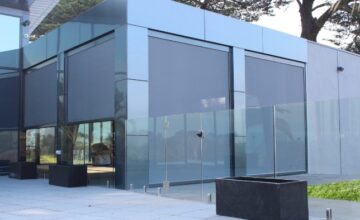
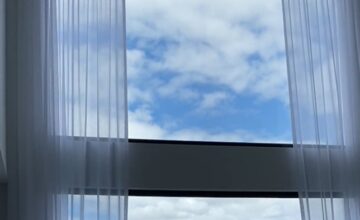
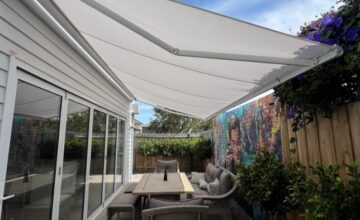
Melbourne’s climate is defined by its variability — scorching 38°C north-wind days in January, stunning mild afternoons in April, and cold southerly blasts that arrive without warning in July. A shading system that can open, close, retract, tilt, or automate in response to these conditions delivers comfort, energy savings, and longevity that fixed architectural solutions simply cannot match. This guide covers every major category of adjustable shading device available for Melbourne homes and businesses — from the simplest roller blind upgrade to a fully motorised louvred roof system.
What Are Adjustable Shading Devices — and Why Do They Matter in Melbourne?
At their core, adjustable shading devices are systems that allow you to dynamically control the amount of solar radiation, glare, and radiant heat entering your home or outdoor space. Unlike fixed architectural elements — built-in eaves, permanent pergola roofing, or static louvre blades — adjustable systems give you control over your environment as conditions change throughout the day and across seasons.
According to the Australian Government’s YourHome Design Guide and Sustainability Victoria, external shading is one of the most cost-effective passive cooling strategies available to Australian homeowners — capable of reducing solar heat gain through windows by a significant margin when correctly applied. Adjustable external shading takes this further by allowing the same system to provide winter sun access when you want warmth, and summer shade when you need relief from the heat.
Melbourne Climate Note: Melbourne receives over 2,000 hours of sunshine annually according to the Bureau of Meteorology, and regularly experiences summer temperatures exceeding 35°C. Adjustable and smart shading devices typically deliver the best long-term value compared to fixed solutions alone.
What Are the Three Types of Shading Devices?
Understanding the fundamental categories helps Melbourne homeowners and business owners select the right system for their specific situation. Shading devices fall into three broad families:
1. Fixed Shading Devices
- Permanently installed architectural elements
- Calculated for specific sun angles
- No adjustability once installed
- Examples: fixed eaves, Dutch hoods, fixed awnings
- Best for: predictable, single-orientation applications
2. Adjustable / Movable Shading Devices
- Retractable, extendable, or tiltable on demand
- Respond dynamically to changing conditions
- Manual or motorised operation
- Examples: folding arm awnings, Ziptrak blinds, roller blinds
- Best for: Melbourne’s highly variable climate
3. Smart / Integrated Shading Devices
- Sensor-driven, app-controlled, or voice-activated
- Compatible with major smart home platforms
- Can respond to temperature, UV index, wind speed, and sun position
- Examples: automated roller blinds, electric awnings with wind sensors, motorised louvred roofing
- Best for: convenience, energy efficiency, and whole-home integration
What Are the 4 Types of Shading Techniques?
Beyond categorising devices, understanding the techniques of shading helps you design a layered approach that performs across all seasons. Architects and sustainable building practitioners recognise four primary shading strategies — all of which translate directly into the product categories offered by Alfresco Blinds Co.
1. Horizontal Overhead Projection
Overhangs, eaves, pergola roofs, and awnings intercept high-angle summer sun (which strikes at a steep angle from overhead) while allowing lower-angle winter sun to pass beneath into north-facing glazing. This is the principle behind folding arm awnings, straight drop awnings, and retractable roofing systems. When these systems are motorised and adjustable, they can be fully retracted in winter for passive solar gain — something a fixed eave cannot do.
2. Vertical and Angled Screening
Low-angle morning and afternoon sun — particularly the brutal west sun that Melbourne homes experience through summer — is best managed by vertical screens and side-channel systems. Outdoor blinds with side tracks, Zipscreen blinds, and Ziptrak blinds create a sealed perimeter that blocks low-angle sun, wind, rain, and insects simultaneously — making them arguably the most versatile adjustable shading devices for Melbourne’s west and east-facing facades.
3. Internal Diffusion and Light Filtering
Once solar radiation has passed through the glass, a significant portion of its heat is already inside the room. Internal blinds and roller blinds are most effective at thermal performance when used in combination with external shading. For rooms where external systems aren’t feasible, double roller blinds — pairing a sunscreen fabric with a cassette blockout blind — offer the most versatile internal solution. Day and night blinds achieve a similar result using alternating opaque and translucent fabric bands.
4. Full Enclosure and Microclimate Control
The most comprehensive approach involves creating a fully controllable outdoor or semi-outdoor environment. Retractable roof systems and louvred roof systems combined with perimeter blinds allow you to enclose, shade, ventilate, or open an outdoor space entirely — transforming an alfresco area into a year-round entertaining room.
 1300 735 077


 Previous