 1300 735 077
Shade Awnings: Modern Outdoor Shading Solutions for Melbourne Homes in 2026
Alfresco Blinds Co
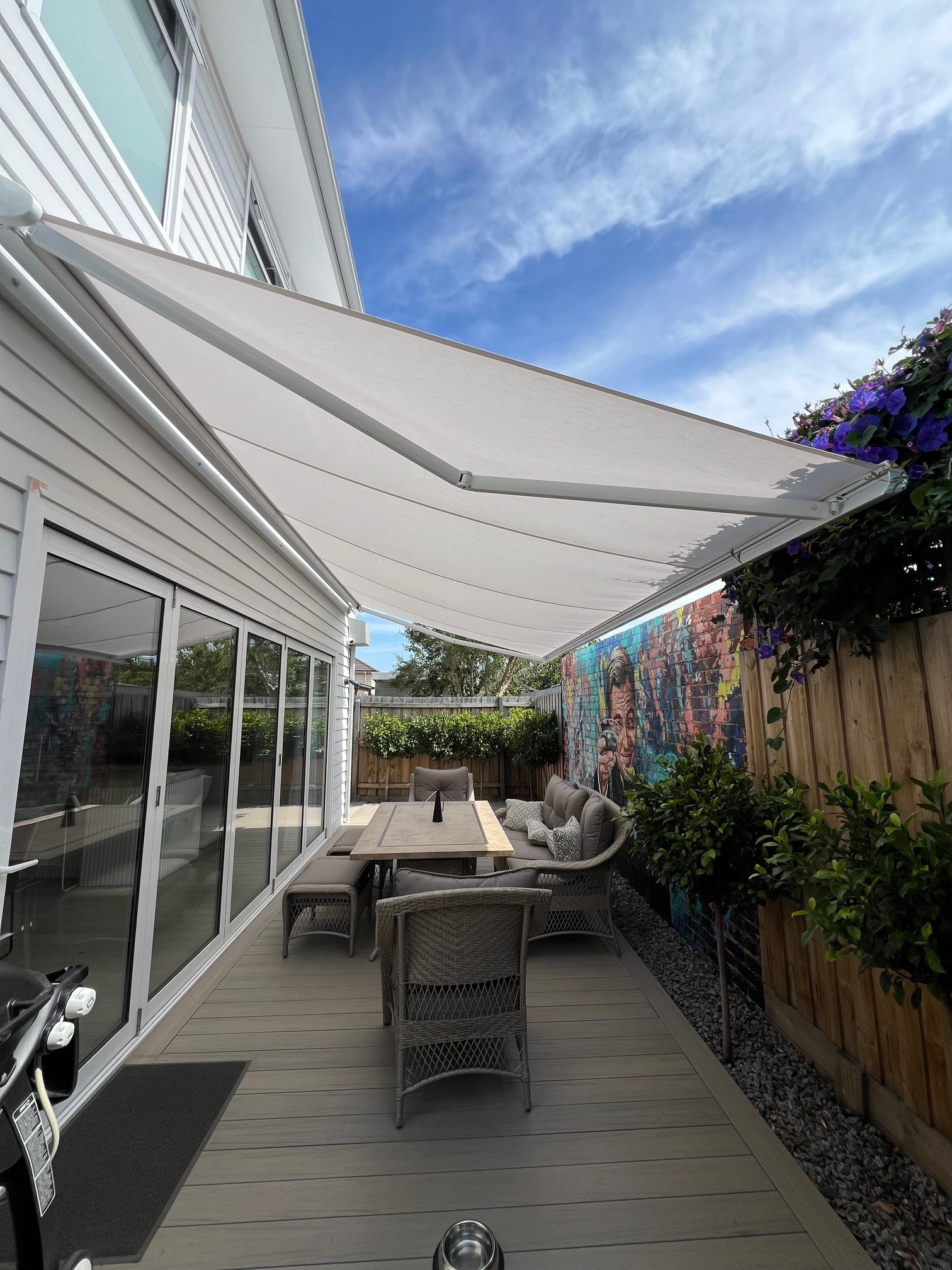
| Quick Answer: Shade awnings are purpose-built outdoor shading systems fixed to the exterior of a home or building — designed to block UV radiation, reduce heat load on glass, and extend the usability of alfresco areas across Melbourne’s unpredictable seasons. Whether you need a retractable folding arm awning over a deck, a motorised system for a north-facing window, or outdoor roller blinds for a patio enclosure, the right solution significantly improves comfort and can reduce indoor cooling costs. If you are ready to explore your options, our awnings page is the best place to start. |
What Are Shade Awnings — And Why Are Melbourne Homeowners Choosing Them?
If you have spent any time looking at modern alfresco extensions, rooftop decks, or contemporary home renovations across Melbourne’s inner and middle-ring suburbs, you have almost certainly encountered shade awnings — even if you did not recognise the system by name.
A shade awning is an exterior fabric or louvre cover fixed to the wall or roof fascia of a building, designed to project outward and intercept direct sunlight before it reaches windows, glass doors, or outdoor living surfaces. Unlike interior curtains or blinds, awnings address solar heat at the source — outside the building envelope — making them one of the most effective passive cooling strategies available to Melbourne homeowners.
According to the Australian Government’s energy rating resources, external shading devices can reduce solar heat gain through windows by up to 90%, making shade awnings genuinely impactful for both comfort and energy bills — not just aesthetics.
In 2026, demand for quality awnings in Melbourne continues to rise sharply. Longer summers, increasing awareness of UV exposure risks, and a cultural shift toward outdoor entertaining have made shade awnings a practical priority — not an optional luxury.
The Main Types of Shade Awnings Available in Melbourne
Not every awning suits every home or outdoor space. Understanding the differences between systems helps you invest in the right solution from the outset.
Folding Arm Awnings
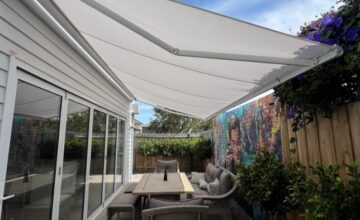
Folding arm awnings are the most popular retractable shade solution for Melbourne alfresco areas and decks. They project outward on articulated arms without requiring any front support posts, leaving the space beneath completely open. The arms fold back against the building wall when retracted, protecting the fabric between uses. Available in manual crank or motorised operation, folding arm awnings are ideal for north and west-facing decks that catch afternoon sun.
Retractable Awnings
Retractable awnings cover a broad category that includes folding arm systems, straight drop awnings, and pivot arm designs — all of which share the ability to extend and retract as conditions change. Melbourne’s variable weather makes retractability particularly valuable: extend the awning on a sunny afternoon, retract before a southerly change arrives.
Motorised Awnings
Motorised awnings use an electric drive system — typically a Somfy or similar quality motor — to extend and retract at the touch of a button. Premium motorised retractable awnings can be paired with wind and sun sensors that automate operation entirely, retracting the awning automatically when wind speeds exceed a safe threshold. For Melbourne homeowners who want set-and-forget convenience, motorised systems represent the most practical long-term investment.
Pivot Arm and Drop Arm Awnings
Pivot arm awnings and drop arm awnings are fixed to the wall above windows and doors, with fabric that drops at an angle or straight down to intercept direct sunlight at the window level. They are a space-efficient solution for window shading where a full folding arm awning would be impractical, and they are one of the most cost-effective forms of window awning available.
Fixed Canopy Awnings
Fixed awnings — sometimes called canopy awnings — are permanently projected structures typically used over entry doors, shop fronts, or windows where year-round shading is desired. Canvas awnings remain a popular fixed option for heritage-style Melbourne homes, offering a traditional aesthetic with solid UV protection.
Wire Guided Awnings
Wire guided awnings — also called auto sunblinds — use tensioned stainless steel cables to guide a fabric blind vertically as it extends and retracts. They are architecturally clean, with minimal hardware visible from the exterior, making them a preferred choice for contemporary Melbourne homes where facade aesthetics are a priority.
Awning Types at a Glance — Which Suits Your Melbourne Home?
| Awning Type | Best For | Motorised Option | Approx. Starting Cost |
|---|---|---|---|
| Folding Arm Awning | Decks, alfresco areas | Yes | From ~$1,800 |
| Retractable Awning | Patios, pergola openings | Yes | From ~$1,500 |
| Pivot / Drop Arm | Window shading | Limited | From ~$800 |
| Fixed Canopy | Entry doors, shopfronts | No | From ~$600 |
| Wire Guided Auto Sunblind | Modern facades, pergolas | Yes | From ~$1,200 |
| Outdoor Roller Blind | Patio enclosure, privacy | Yes | From ~$700 |
Pricing is indicative only and subject to size, fabric selection, and site conditions. Contact Alfresco Blinds Co for an accurate measure and quote.
Outdoor Blinds and Patio Blinds — The Complement to Shade Awnings
For many Melbourne homes, shade awnings work best as part of a broader outdoor shading system rather than as a standalone product. Outdoor blinds — including Ziptrak blinds, café blinds, bistro blinds, and outdoor channel blinds — fill the vertical gaps that awnings leave open, providing wind, rain, and privacy protection around the sides and front of an alfresco space.
Ziptrak Blinds
Ziptrak blinds use a patented track-guided system that allows the blind to be stopped and held at any height without locks or zips — one of the most user-friendly outdoor blind systems available in Melbourne. Combined with a folding arm awning overhead, a Ziptrak-enclosed alfresco becomes a genuinely weatherproof outdoor room.
Outdoor Roller Blinds
Outdoor roller blinds for Melbourne patios are available in PVC, mesh, and block-out fabrics — each offering different levels of visibility, ventilation, and weather resistance. Motorised outdoor blinds can be integrated with the same automation system as a motorised awning, creating a fully automated outdoor shading setup.
Café Blinds and Bistro Blinds
Café blinds and bistro blinds are PVC-panel outdoor blinds commonly used on residential alfresco areas, balconies, and commercial hospitality spaces throughout Melbourne. They provide clear visibility while blocking wind and light rain — a practical choice for three-season outdoor entertaining.
Ezip and Zipscreen Blinds
Ezip blinds and Zipscreen blinds use a zip-guided side track system that keeps the fabric tensioned against wind, providing a tighter weatherseal than standard outdoor roller blinds — ideal for Melbourne’s gusty spring conditions and exposed coastal suburb locations.
Pergola vs Shade Awnings — Which Is the Better Investment for Melbourne?
| Quick Answer: Awnings are generally more affordable, faster to install, and more flexible than pergolas. A retractable awning lets you control exactly how much sun and shade you want at any time — a fixed pergola roof cannot do that. However, a pergola offers permanent structure and can support louvred roof systems, making it a superior platform for full outdoor room enclosures. |
This is one of the most common questions Melbourne homeowners ask when planning an outdoor shading project — and the honest answer is that it depends entirely on what you want the space to do.
Awnings win on:
- Cost — typically $1,500–$6,500 vs $8,000–$30,000+ for a pergola
- Installation speed — most awnings are installed within a day
- Flexibility — retractable systems let you choose sun or shade at any time
- Permit requirements — standard residential awnings generally do not require planning permits in most Melbourne council zones (always verify with your specific local council)
- Fabric choice — wide variety of UV-rated, weatherproof fabrics from suppliers like Zepel Fabrics, Outlook by Ricky Richards, and Warwick Fabrics
Pergolas win on:
- Permanence and structural longevity
- Ability to support heavier roof systems like louvred roofs
- Aesthetic integration with the home’s architecture
- Year-round all-weather enclosure potential
For Melbourne homeowners who want outdoor shading without the commitment and cost of a pergola build, a quality folding arm awning or retractable awning paired with patio and pergola blinds delivers a comparable outdoor room result at a fraction of the cost.
If budget allows and year-round use is the goal, Alfresco Blinds Co also supply and install retractable roof systems and louvred roof systems — the closest thing to a fully weatherproof outdoor room without permanent construction.
Melbourne Climate and the Case for Quality Shade Awnings
Melbourne’s climate is notoriously variable — four seasons in one day is more than a cliché. Summers bring intense UV radiation and temperatures regularly exceeding 35°C, while spring and autumn deliver unpredictable wind shifts and sudden heavy rain. Winter mornings can dip below 5°C. Any outdoor shading solution chosen for a Melbourne home needs to perform reliably across this full seasonal range.
The Cancer Council Australia consistently rates Melbourne among Australia’s highest UV-risk cities during summer months. Shade awnings that carry a high UPF rating are not simply a comfort product — they are a genuine health protection investment for families spending time outdoors.
Key Melbourne-specific considerations when choosing shade awnings:
- Wind resistance: Melbourne’s notorious southerly wind changes demand awnings with robust arm mechanisms and — ideally — wind sensors on motorised systems to prevent fabric damage during unexpected gusts.
- UV-rated fabric: Fabrics sourced from trusted suppliers like Outlook by Ricky Richards, Zepel Fabrics, and MK Fabrics carry independent UV ratings and are warranted for Australian conditions.
- Orientation: North and west-facing aspects receive the most intense sun load in Melbourne. Folding arm awnings and pivot arm window awnings are particularly effective on these elevations.
- Seasonality: Retractable systems outperform fixed awnings in Melbourne because they can be stored in winter when maximum natural light and passive solar warmth are desirable through glass.
Motorised Awnings and Automation — Convenience That Pays for Itself
Motorised retractable awnings have moved from premium luxury to practical standard for Melbourne homeowners investing in outdoor shading systems in 2026. The reason is straightforward: Melbourne weather changes fast, and manually cranking a large awning in or out during every weather shift is inconvenient enough that many homeowners simply leave the awning extended — exposing it to wind damage.
A quality motorised awning system eliminates that problem. One-touch remote control, smartphone app integration, and optional home automation compatibility mean the awning works when you need it and protects itself when you do not.
Wind and Sun Sensors
Wind sensors monitor real-time wind speed and automatically retract the awning when gusts exceed a set threshold — typically 35–50 km/h depending on the awning size and installation. Sun sensors can automatically extend the awning when solar radiation reaches a set intensity, providing hands-free shade management throughout the day.
Motorised Outdoor Blinds
Motorised outdoor blinds for Melbourne patios can be integrated into the same control system as a motorised awning — allowing the entire outdoor shading setup to be operated from a single remote or app. This level of integration is particularly valuable for larger alfresco areas where multiple blinds and an awning need to work in coordination.
Alfresco Blinds Co’s team has over 60 years of combined experience installing motorised shading systems across Melbourne — ensuring correct motor sizing, sensor calibration, and smart home integration from the outset.
Shade Awnings and Energy Efficiency — The Numbers That Matter
The relationship between external shading and home energy efficiency is well documented by Australian building authorities. The Your Home design guide, published by the Australian Government, specifically identifies external awnings as one of the highest-impact passive shading strategies available for existing homes — more effective than internal blinds or curtains because they intercept solar radiation before it enters the building.
For a typical Melbourne home with significant north or west-facing glazing, well-designed shade awnings can:
- Reduce solar heat gain through windows by 60–90%
- Lower peak indoor temperatures by 3–8°C on summer afternoons
- Reduce air conditioning runtime and energy consumption during summer peak periods
- Maintain full winter solar access when retracted — avoiding the passive solar penalty that fixed awnings impose
For homeowners looking to reduce their carbon footprint and energy bills simultaneously, retractable shade awnings offer a compelling return on investment that fixed roof structures and interior window treatments cannot match.
Window Awnings — Targeted Shading for Individual Windows and Doors
Window awnings are fixed or adjustable fabric or aluminium covers positioned directly above individual windows and doors. Unlike a large folding arm awning that covers an entire deck, window awnings address heat and glare at the specific glass level — making them ideal for rooms where internal overheating is a persistent problem.
In Melbourne’s established suburbs, canvas window awnings remain a popular choice for Federation and Edwardian-era homes where period-appropriate aesthetics matter. Contemporary homes more commonly use pivot arm or drop arm awnings in powder-coated aluminium frames — cleaner in profile and lower in maintenance than traditional canvas.
For west-facing bedrooms, home offices, and living rooms — the elevations most affected by Melbourne’s intense afternoon sun — window awnings provide targeted, cost-effective shading that makes a measurable difference to comfort without the full cost of a large retractable system.
Maintaining Your Shade Awnings — A Practical Melbourne Guide
Shade awnings are a long-term investment. With the right maintenance routine, a quality awning installed by Alfresco Blinds Co — backed by a 5 Year Warranty — should perform reliably for ten years or more. Neglect the basics and fabric degradation, mould, and mechanical issues appear far sooner.
Seasonal Maintenance Checklist
- Spring: Inspect fabric for winter mould spots. Clean with a soft brush and mild soapy water. Do not use high-pressure washers on awning fabric. Check arm tension and lubricate pivot points lightly with a silicone-based lubricant.
- Summer: Retract the awning during high winds. Do not leave the awning extended overnight if strong wind is forecast. Check motorised systems and sensor operation before peak season.
- Autumn: Clean fabric thoroughly before the wet season. Inspect stitching, valance edges, and any contact points for early wear.
- Winter: If the awning is not being used, retract it and store it in the retracted position to minimise UV and weather exposure on the fabric.
Common problems with retractable awnings — including spring tension loss, fabric sagging, and motor sluggishness — are almost always the result of deferred maintenance rather than product failure. Scheduling an annual service check with your installer significantly extends the operational life of the system.
Quality fabrics from suppliers like Zepel Fabrics and Outlook by Ricky Richards carry independent UV degradation ratings and are treated for mould resistance — making them a measurably better long-term choice than unspecified import fabrics.
Installation Considerations for Melbourne Homes
A shade awning is only as good as its installation. Incorrect bracket fixing into inappropriate wall substrates — particularly common in older Melbourne brick veneer and weatherboard homes — is the leading cause of premature awning failure and potential structural damage. Professional installation by experienced tradespeople is not a marketing talking point; it is a practical safety requirement.
Alfresco Blinds Co’s installation team has completed over 15,000 hours of field work across 100+ Melbourne locations, covering everything from inner-city terrace houses to large suburban alfresco builds. That breadth of experience means the team encounters and solves uncommon installation challenges regularly — not as exceptions.
Do I Need Council Approval?
In most Melbourne municipal areas, standard residential shade awnings attached to an existing dwelling do not require a planning permit under the Victorian Planning Provisions — provided they meet height, setback, and size parameters. However, properties in heritage overlays, bushfire management zones, or covenant-restricted estates may face additional requirements. Always confirm with your local council before proceeding. Alfresco Blinds Co’s team can advise on typical requirements based on your suburb and property type.
What Can You Use Instead of Shade Awnings?
Shade awnings are not the only outdoor shading solution available to Melbourne homeowners. Depending on your space, budget, and aesthetic priorities, the following alternatives are worth considering:
- Ziptrak Outdoor Blinds: Track-guided outdoor blinds that enclose alfresco areas on three sides — excellent for wind and rain protection alongside overhead shading.
- Louvred Roof Systems: Adjustable aluminium louvres that replace a solid roof — open for ventilation, close for rain protection, angle for shade. The most versatile permanent outdoor shading structure available.
- Retractable Sunroof Pergola: A fabric or polycarbonate retractable roof system that covers the entire alfresco — providing full overhead protection when closed.
- Straight Drop Awnings: Fabric blinds that drop vertically from a pelmet box — simpler and more compact than a folding arm awning, ideal for narrow balconies or window applications.
- Shade Sails: A low-cost option for large, open areas. Less durable and less weather-resistant than purpose-built awnings, but effective for casual shade in garden spaces.
The best alternative to an awning is usually another purpose-built product from Alfresco Blinds Co’s outdoor shading range — not a makeshift solution that will require replacement within a few seasons.
Frequently Asked Questions — Shade Awnings for Melbourne Homes
Which is cheaper — a pergola or an awning?
Awnings are substantially more affordable. A quality retractable awning in Melbourne typically starts from around $1,500–$4,000 installed, while a pergola structure ranges from $8,000 to $30,000 or more depending on materials, size, and engineering requirements. Awnings also require less council approval and can be installed within a single day.
Can awnings be used to shade?
Yes — shade is the primary function of awnings. Properly installed shade awnings block up to 90% of direct UV radiation and significantly reduce solar heat gain through windows and glass doors. They are one of the most effective passive shading strategies available for existing Melbourne homes, endorsed by the Australian Government’s Your Home design guide.
What is the average cost to install a retractable awning in Melbourne?
The average cost to supply and install a retractable awning in Melbourne ranges from approximately $1,800 to $6,500 depending on width, projection, fabric selection, and whether motorisation is included. Motorised retractable awnings with wind sensors sit at the higher end of this range. Contact Alfresco Blinds Co for a no-obligation measure and quote specific to your home.
What are the disadvantages of awnings?
Fixed awnings can block winter sun, reducing passive solar gain when warmth is desirable. Retractable awnings must be brought in during high winds, which can be inconvenient without a motorised system. Fabric awnings require periodic cleaning and inspection. However, most disadvantages are resolved by choosing a retractable, motorised system with a quality UV-rated fabric — which is why this combination is now the most popular choice for Melbourne homes.
Do I need permission to put up a shade awning in Melbourne?
In most Melbourne council areas, standard residential shade awnings on existing dwellings do not require a planning permit under the Victorian Planning Provisions. However, heritage overlays, specific zoning controls, or larger structures may require approval. Always check with your local council before installation. The Victorian Department of Transport and Planning provides clear guidance on exemptions.
What are the common problems with retractable awnings?
The most common issues are fabric wear from UV exposure, motor failure in under-specified motorised units, arm spring tension loss over time, and fabric sagging from water pooling on a flat pitch. Selecting quality fabrics from suppliers specifying the correct arm spring tension for the awning size, and scheduling annual service inspections eliminates most of these problems before they develop.
Why did Australians stop using awnings — and why are they back?
Awnings fell out of favour mid-20th century as air conditioning became affordable and architectural fashions shifted toward uninterrupted glass facades. The return is driven by rising energy costs, growing awareness of UV exposure risks, outdoor entertaining culture, and the significantly improved aesthetics of modern retractable and motorised awning systems compared to their predecessors.
How do I choose the right fabric for my shade awning?
Fabric choice depends on the level of shading, privacy, and weather protection required. Open-weave acrylic fabrics provide UV protection while maintaining airflow and visibility. Solution-dyed acrylics resist UV fade and mould far better than polyester alternatives. PVC-coated fabrics offer superior rain protection but less breathability. Alfresco Blinds Co’s consultants help Melbourne homeowners match fabric specification to their specific exposure and usage requirements.
What is the lifespan of a quality shade awning in Melbourne?
A professionally installed shade awning using quality UV-rated fabric — maintained according to a seasonal schedule — should perform reliably for 10–15 years in Melbourne conditions. The mechanical components (arms, motors, tracks) typically outlast the first fabric installation, meaning fabric replacement at the 10-year mark is often more cost-effective than full awning replacement.
Conclusion — Shade Awnings Remain the Smartest Outdoor Investment for Melbourne Homes
In 2026, shade awnings have firmly re-established themselves as the practical, attractive, and energy-efficient outdoor shading solution for Melbourne homeowners who want to get more from their alfresco spaces without the cost and commitment of a full pergola build.
Whether you are looking at a motorised folding arm awning for a north-facing deck, pivot arm window awnings to address west-facing bedroom heat, a Ziptrak-enclosed alfresco with an awning overhead, or a full motorised outdoor blind and awning system operated from your phone — Alfresco Blinds Co has the product range, the installation experience, and the Melbourne-specific knowledge to deliver a result that performs for years.
With over 60 years of combined team experience, 3,000+ installations completed, and a 5 Year Warranty on all work, Alfresco Blinds Co is the family-run Melbourne business homeowners trust to get outdoor shading right the first time. Explore the full range of shade awnings, outdoor blinds, and retractable roof systems — or contact the team today to arrange a free measure and quote at your Melbourne home.
 Previous

Follow Us on Instagram
