 1300 735 077
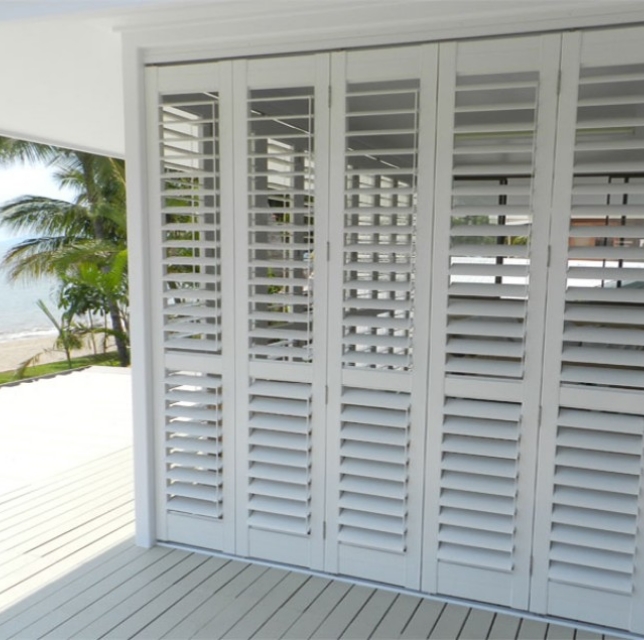
If you’ve been shopping for window furnishings in Melbourne lately, chances are Timber Plantation Shutters have come up more than once — and for very good reason. These beautifully crafted window coverings have become the go-to choice for Melbourne homeowners who want a product that looks stunning from the street, performs brilliantly through every season, and genuinely adds resale value to their property. Whether you’re renovating a Federation-era terrace in Carlton, outfitting a new build in Werribee, or refreshing a bayside home in Brighton, timber shutters offer a timeless aesthetic that synthetic alternatives simply cannot replicate.
But with so much information out there — and quite a bit of it outdated or conflicting — knowing exactly what you’re buying can feel overwhelming. In this guide, the team at Alfresco Blinds Co. breaks down everything you need to know: from timber species and louvre sizing to installation timelines, cost benchmarks, climate performance in Melbourne’s famously variable weather, and how timber shutters compare to PVC and composite alternatives.
Quick Answer: Timber Plantation Shutters — typically made from kiln-dried basswood or paulownia — are the premium choice for Melbourne homes. They’re lighter than PVC, more thermally efficient than roller blinds, and when professionally installed, they last decades. The investment is higher upfront, but the return in liveability and property value makes them worth every cent.
Why Timber Plantation Shutters Are Melbourne’s Most Sought-After Window Covering
Melbourne’s property market is one of the most competitive in the country, and savvy homeowners know that window furnishings are among the highest-ROI improvements you can make. Buyers’ agents consistently cite presentation quality — including window coverings — as a key differentiating factor during property inspections.
But aesthetics only tell half the story. Melbourne’s climate — characterised by hot, dry summers, cold winters, and what locals lovingly call “four seasons in one day” — places real demands on any window covering. Timber plantation shutters, when manufactured correctly and installed by experienced professionals, handle this variability exceptionally well:
Light Control
Adjust louvres from fully open to fully closed — filter afternoon glare or let in maximum light on grey winter mornings with a simple tilt.
Thermal Efficiency
Closed timber louvres create an insulating air barrier that reduces heat transfer — keeping rooms cooler in summer and warmer in winter.
Privacy & Ventilation
Angle louvres downward to maintain full privacy while still allowing fresh air and natural light to circulate through the room.
Durability
Kiln-dried and primed timber shutters, properly maintained, routinely last 15–25+ years — outlasting most roller blind and curtain alternatives.
Property Value
Real estate agents report that quality plantation shutters reduce vendor negotiation pressure and present the home as move-in ready.
Design Flexibility
Available in custom paint and stain finishes, panel configurations, and louvre sizes — designed to suit your home’s exact style.
Plantation Shutters Melbourne: Timber vs. PVC vs. Composite — What’s the Real Difference?
One of the most common questions Melbourne homeowners ask when researching plantation shutters is whether to choose timber, PVC, or a composite (also called ABS polymer or faux wood). Each material has its place, but understanding the distinctions will help you invest wisely and avoid a costly mistake.
| Feature | Timber (Basswood/Paulownia) | PVC | Composite / ABS |
|---|---|---|---|
| Appearance | ✔ Premium, authentic grain | ~ Smooth, plastic look | ~ Timber-like finish |
| Weight | ✔ Lightweight | ✘ Heavy (limits panel width) | ~ Moderate |
| Waterproof | ~ Moisture-resistant only | ✔ Fully waterproof | ✔ Highly moisture resistant |
| Thermal insulation | ✔ Excellent | ~ Good | ~ Good |
| Paint / stain options | ✔ Full range — paint or stain | ✘ Paint only (limited) | ~ Paint only |
| Large window suitability | ✔ Excellent — wide panels possible | ✘ Panel width limited by weight | ~ Moderate |
| Typical cost (per panel – verification recommended) | $350 – $750+ | $200 – $450 | $280 – $550 |
| Lifespan (with care) | ✔ 15–25+ years | 10–18 years | 12–20 years |
| Best suited for | Living areas, bedrooms, hallways, heritage homes | Bathrooms, laundries, wet areas | High-humidity zones, rental properties |
For the vast majority of Melbourne homes — especially in living areas, bedrooms, studies, and hallways — timber is the clear winner. It’s lighter than PVC, which allows for wider panel configurations without drooping or warping over time. Basswood and paulownia accept paint and stain finishes beautifully, giving you genuine design flexibility that no PVC product can match.
Pro Tip: Reserve PVC shutters for bathrooms and laundries where moisture exposure is constant. Use timber throughout the rest of your home for a cohesive, premium result. Mixing materials room-by-room is entirely normal and a smart way to manage budget without compromising on aesthetics where it matters most.
Choosing the Right Louvre Size and Configuration for Your Melbourne Home
Louvre width is one of the most impactful decisions you’ll make when specifying your timber plantation shutters — and it’s one that’s surprisingly easy to get wrong. The louvre is the horizontal slat that tilts to control light and airflow, and its width directly affects both the visual proportion of the shutter and the amount of light that passes through when open.
Louvre Size Guide: What Works Where
Traditional look. Best for small windows, period homes, and heritage streetscapes where a finer proportion is historically appropriate.
Versatile mid-size. Works across most standard Melbourne window proportions — a balanced choice for bedrooms and medium rooms.
The most-requested size in Melbourne right now. Gives excellent light-open ratio and suits modern and contemporary interiors beautifully.
Bold, expansive slat ideal for large windows, bi-fold openings, and open-plan spaces. Creates maximum light flow when open.
Panel Configurations: Full Height, Café Style, Tier-on-Tier & Bi-Fold
Beyond louvre size, the panel configuration determines how your shutters open and how they interact with your window architecture. Some suppliers offer a fifth size — 47mm, but that is rare. Therefore, the four most popular configurations in Melbourne are:
- Full-height panels — Cover the entire window from sill to head. The classic, clean-lined option that suits most Melbourne homes.
- Café style (half-height) — Shutters cover only the lower half of the window, preserving privacy at street level while allowing light and views from the upper half. Popular in terrace homes along inner-Melbourne streets.
- Tier-on-tier — Two independent sets of panels stacked vertically — top and bottom can be opened or closed independently for maximum control.
- Bi-fold configuration — Multiple narrow panels hinged together and folding back accordion-style. Ideal for wide windows, sliding door openings, and room dividers.
- Tracked sliding panels — Panels slide horizontally on a track, offering a streamlined look for large glazed walls and sliding door configurations.
Pairing Timber Shutters with Indoor Roller Blinds and Dual Roller Blinds for Total Light Control
While timber plantation shutters handle the majority of light and privacy needs exceptionally well on their own, many Melbourne homeowners choose to layer window furnishings for enhanced functionality — particularly in bedrooms and home theatres where complete blockout is desired, or in living rooms where solar control during peak western sun needs reinforcement.
The most effective pairing we see at Alfresco Blinds Co. is indoor roller blinds mounted within the window recess behind the shutter panels. When the shutters are open for light and views, the roller blind sits hidden and flush. When you need complete darkness — for a home cinema, late-morning sleep, or afternoon nap — the roller blind drops down and the shutters can be closed over the top for double-layer insulation and blockout.
Dual Roller Blinds: The Smart Pairing for Timber Shutters
Our Dual Roller Blinds feature two independent fabrics on a single bracket — a sheer or sunscreen fabric for daytime glare control and a full blockout fabric for complete darkness. Mounted behind timber shutters, this combination gives you total environmental control across every hour of the day and every season Melbourne throws at you.
- Sheer fabric filters glare without blocking the view
- Blockout fabric provides complete room darkening
- Both fabrics share one discreet bracket — no visual clutter
- Available with motorisation for smart home integration
For windows where privacy and light are both critical — particularly street-facing bedrooms — our team also recommend Blockout Blinds With Side Tracks. The side-track system eliminates the light gaps that appear at the edges of standard roller blinds, delivering true pharmaceutical-grade darkness — essential for shift workers or anyone who takes their sleep seriously. Pair these behind timber shutters on east-facing bedrooms and you’ve built the ultimate sleep environment.
Beyond the Glass: Motorised Outdoor Blinds, Folding Arm Awnings, and the Complete Home Shade System
The most effective approach to managing Melbourne’s heat, glare, and privacy isn’t treating windows in isolation — it’s designing a whole-of-home shading system where indoor and outdoor products work together. At Alfresco Blinds Co., we regularly design integrated solutions that combine timber plantation shutters indoors with a complementary outdoor shading layer.
Folding Arm Awnings: Extending Outdoor Living All Year Round
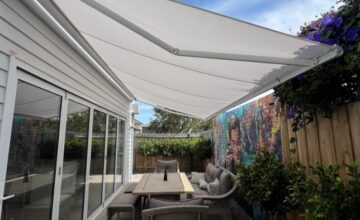
For Melbourne homes with north or west-facing alfresco areas — decks, patios, or entertainment zones — Folding Arm Awnings are the outdoor companion product that transforms your space. A quality folding arm awning can extend shade coverage up to 5 metres from the wall, reducing indoor temperatures by blocking solar gain before it hits the glass — which in turn reduces the load on your plantation shutters and air conditioning.
The most popular configuration right now in Melbourne’s inner-east and bayside suburbs is a folding arm awning over the alfresco area paired with timber plantation shutters on adjacent living room windows — creating a seamless indoor-outdoor shade zone that works from morning through to evening.
Motorised Outdoor Blinds: Automation That Actually Makes Sense
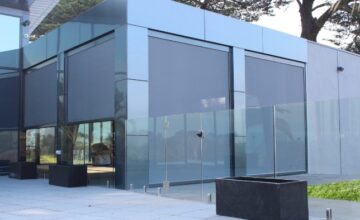
For homeowners who want outdoor weather protection without compromising the open feel of their alfresco area, Motorised Outdoor Blinds are the modern answer. Drop them at the touch of a button — or set them on a timer or wind sensor — to protect against afternoon sun, coastal winds, or evening mosquitoes.
The integration of smart-home compatible motorisation (via Somfy or similar systems) means your outdoor blinds can respond to the same app or voice assistant as your indoor motorised roller blinds — creating a genuinely cohesive, intelligent home environment. Melbourne’s climate swings make this automation particularly practical: a wind sensor that automatically retracts the outdoor blind during a sudden southerly change protects your investment without you needing to be home.
Retractable Awnings Melbourne: The Versatile Middle Ground
Retractable Awnings Melbourne homeowners love because they offer the best of both worlds — full shade when you need it, and completely clear sky when you don’t. Unlike fixed-frame shade structures, a retractable awning stores flush against the facade when retracted, preserving your home’s streetscape appearance and protecting the fabric from unnecessary UV and weather wear.
Combined with timber plantation shutters on your interior windows and awnings on your exterior walls, you can effectively manage solar gain, glare, and outdoor comfort across your entire property — without resorting to air conditioning as a first resort.
How Much Do Timber Plantation Shutters Cost in Melbourne? (2026 Pricing Guide)
Pricing is consistently the first question people ask — and understandably so. The challenge with plantation shutter pricing is that it genuinely varies significantly based on window size, configuration, timber species, finish, and the installer’s level of experience and product quality. Below is an honest, up-to-date benchmark for Melbourne in 2026.
| Scenario | Estimated Cost (Fully Installed, AUD) | Notes |
|---|---|---|
| Single standard window (900×1200mm) | $600 – $1,100 | Includes supply, install, and hardware |
| Master bedroom (2 windows) | $1,200 – $2,400 | Depends on window size and configuration |
| Living room bi-fold configuration | $2,000 – $4,500+ | Wider openings require more panels and hardware |
| Full 3-bed Melbourne home | $6,000 – $14,000+ | Varies by home size, number of windows, and species |
| Premium basswood — custom stain finish | Add 15–25% to standard price | Custom stain requires more prep and finishing time |
These figures are based on current Melbourne supply-and-install pricing for premium-grade basswood shutters with standard paint finish. Always request a full measure-and-quote — reputable companies like Alfresco Blinds Co. provide these at no charge, giving you an exact, fixed price before you commit.
Important: Be cautious of very low price quotes. Cheap plantation shutters often use low-grade basswood with inferior kiln-drying processes, which can lead to warping, cracking, or paint adhesion failures within 2–4 years in Melbourne’s climate swings. The CHOICE Australia consumer guide on plantation shutters recommends always confirming the timber species and kiln-drying specification in writing before purchasing.
What’s the Installation Timeline? From Quote to Completion
The installation process for custom timber plantation shutters in Melbourne follows a clear, predictable sequence:
- Step 1 — Free In-Home Measure & Quote (1–2 hours): Our team visits, measures every window precisely, discusses your design preferences, and provides a fixed written quote.
- Step 2 — Order Confirmation & Manufacturing (6–10 weeks at max): Your shutters are custom manufactured to your exact specifications. Lead times vary slightly with demand.
- Step 3 — Pre-Installation Check: We contact you approximately one week before your installation date to confirm access, timing, and any final details.
- Step 4 — Installation Day (1–2 days for a full home): Our qualified installers fit, align, and finish your shutters — leaving your home clean and the product ready to use immediately.
- Step 5 — Post-Installation Walkthrough: We demonstrate the operation of every panel, tilt rod, and hinge, and confirm you’re completely satisfied before we leave.
Frequently Asked Questions About Timber Plantation Shutters in Melbourne
Why Melbourne Homeowners Choose Alfresco Blinds Co. for Plantation Shutters
With so many window furnishing companies operating across Melbourne, the question of who to trust with a significant home investment is a legitimate one. At Alfresco Blinds Co., our approach is straightforward: we supply only products we’d install in our own homes, we price transparently, and our installation team is experienced, punctual, and tidy.
- Custom timber plantation shutters manufactured to your exact window dimensions — no “close enough” sizing
- Free in-home measure and consultation — no pressure, no obligation
- Full product range across Plantation Shutters, Indoor Roller Blinds, Outdoor Blinds, and Awnings — one company for your entire home
- Experienced installation team with attention to finish detail
- Transparent pricing with a fixed written quote — no surprise variations at installation
- Established Melbourne business with a genuine local reputation to protect
 Previous