 1300 735 077
The best custom blinds for Melbourne homes are roller blinds — and for good reason. They’re versatile, low-profile, available in dozens of fabrics from sheer sunscreens to full blockout, and can be motorised to work with your smart home system. Whether you’re furnishing a new build in the outer east or upgrading a Victorian terrace in Fitzroy, made-to-measure roller blinds from a local Melbourne specialist give you a precise fit, the right fabric for the room, and a result that genuinely lifts the feel of the space.
If you’ve been searching for custom blinds in Melbourne and finding yourself drowning in options — sunscreens, blockouts, double rollers, cassette systems, motorised, manual — you’re not alone. It’s genuinely one of the most asked-about home improvement decisions Melbourne homeowners face, and the volume of conflicting information online doesn’t make it any easier.
This guide cuts through the noise. We’ll answer the real questions people actually search: what’s the difference between a sunscreen and blockout blind, which fabric works in which room, how long do they last in Melbourne’s climate, and whether motorised roller blinds are genuinely worth the investment. If you’d rather speak to someone directly, the team at Alfresco Blinds Co offers free in-home consultations across Melbourne — no pressure, no obligation.
Why Custom Blinds Beat Off-the-Shelf Every Time for Melbourne Homes
Walk into any big-box retailer and you’ll find roller blinds in standard widths — typically 60cm, 90cm, 120cm, and 150cm. The problem is that Melbourne homes, from Victorian terraces with narrow sash windows to new-build double-glazed sliding doors, rarely have standard-sized openings. A blind that’s even 10mm too narrow leaves light gaps on both sides — the same gaps that let in early-morning light in bedrooms and destroy privacy on street-facing rooms.
Custom roller blinds are made to the exact millimetre of your window opening — or your specified reveal — giving you a clean, built-in look that off-the-shelf alternatives cannot replicate. Beyond fit, the fabric quality available through professional custom suppliers far exceeds what you’ll find in a retail environment, with Australian-standard UV ratings, genuine blockout coatings, and fire-retardant options for commercial and early-childhood settings.
When measuring for a roller blind, always measure in three places — top, middle, and bottom for width, and left, centre, and right for height. Use the smallest measurement for the width if inside-mount, and the largest for outside-mount. Even minor errors can mean a blind that won’t retract properly or leaves noticeable gaps.
Sunscreen vs Blockout Roller Blinds: What’s the Actual Difference?
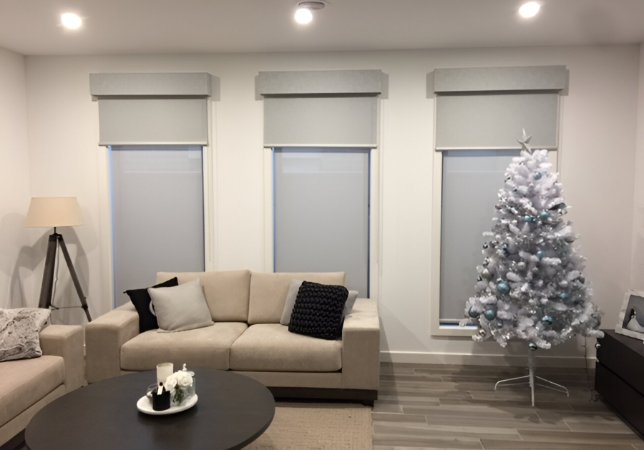
Sunscreen fabrics reduce glare while preserving outward views — ideal for living areas and studies.
This is the question we get asked more than any other, and it’s worth getting right because choosing the wrong fabric for a room is one of the most common and most frustrating mistakes Melbourne homeowners make. Here’s a straight answer:
| Feature | Sunscreen Roller Blind | Blockout Roller Blind |
|---|---|---|
| How it works | Woven fabric with small perforations that diffuse light | Coated or multi-layer fabric that blocks all light |
| Preserves view? | ✔ Yes — you can see out, but privacy varies by fabric openness | ✘ No — opaque when down |
| Daytime privacy | ~ Partial — depends on openness factor | ✔ Complete |
| UV protection | ✔ Excellent — blocks 80–99% UV depending on openness | ✔ Excellent — virtually 100% |
| Best rooms | Living rooms, kitchens, offices, studies | Bedrooms, home theatres, nurseries |
| Night-time privacy | ✘ None — transparent from outside when lights are on | ✔ Complete |
| Available with motorisation? | ✔ Yes | ✔ Yes |
The detail most people miss with sunscreen blinds is the openness factor — a percentage that describes how much of the fabric is open weave versus solid yarn. A 3% openness factor is tighter-woven with better privacy and more glare reduction; a 10% openness gives more of a gauze-like effect with clearer views but less solar blockage. For Melbourne’s west-facing rooms that cop the full brunt of afternoon sun, a 3–5% openness sunscreen is usually the call. For east-facing studies with pleasant morning light, a 10% fabric keeps the room feeling open and airy.
Openness Factor Visual Guide
Higher openness = more transparency & view; lower openness = better glare reduction & privacy.
Why Double Roller Blinds Are Melbourne’s Fastest-Growing Window Treatment
If you’ve ever wished you could have both a sunscreen and a blockout blind on the same window — without two separate brackets and two pull chains — you’re exactly who double roller blinds were designed for. They’re one of the fastest-growing blind products in Melbourne right now, and once you see one in action, it’s hard to argue with the concept.
A double roller blind system mounts two independent fabric rollers on a single set of brackets — one sheer or sunscreen fabric and one blockout fabric — both operating from the same headrail. During the day, the sunscreen drops to filter afternoon glare while you maintain your outlook over the garden or street. Come evening, the blockout drops over the top, giving you complete privacy and darkness. It sounds simple because it is — and the single-bracket execution keeps it visually clean and unobtrusive.
🌞 Daytime Mode
Sunscreen fabric deployed — filters UV and glare, preserves views, reduces solar heat gain into the room.
🌙 Night Mode
Blockout fabric deployed — complete darkness and privacy. Both fabrics can coexist for double-layer insulation.
⚙️ One Bracket
Both rollers on a single, slim headrail — no bulky double brackets, no cluttered window reveal.
🏠 Any Room
Ideal for living areas, master bedrooms, home offices — anywhere that needs two modes across the day.
Double roller blinds are particularly popular in Melbourne’s inner-north and inner-east suburbs where terrace homes have street-facing bedrooms. The sheer handles daytime privacy from passing foot traffic while the blockout manages early-morning light that Melbourne’s long summer days bring from 5:30am onwards.
Which Roller Blind Fabric Is Right for Each Room?
One of the most useful things an experienced Melbourne blind supplier can do is give you a genuine room-by-room recommendation — not just list products. Here’s how the Alfresco Blinds Co. team approaches fabric selection for Melbourne homes:
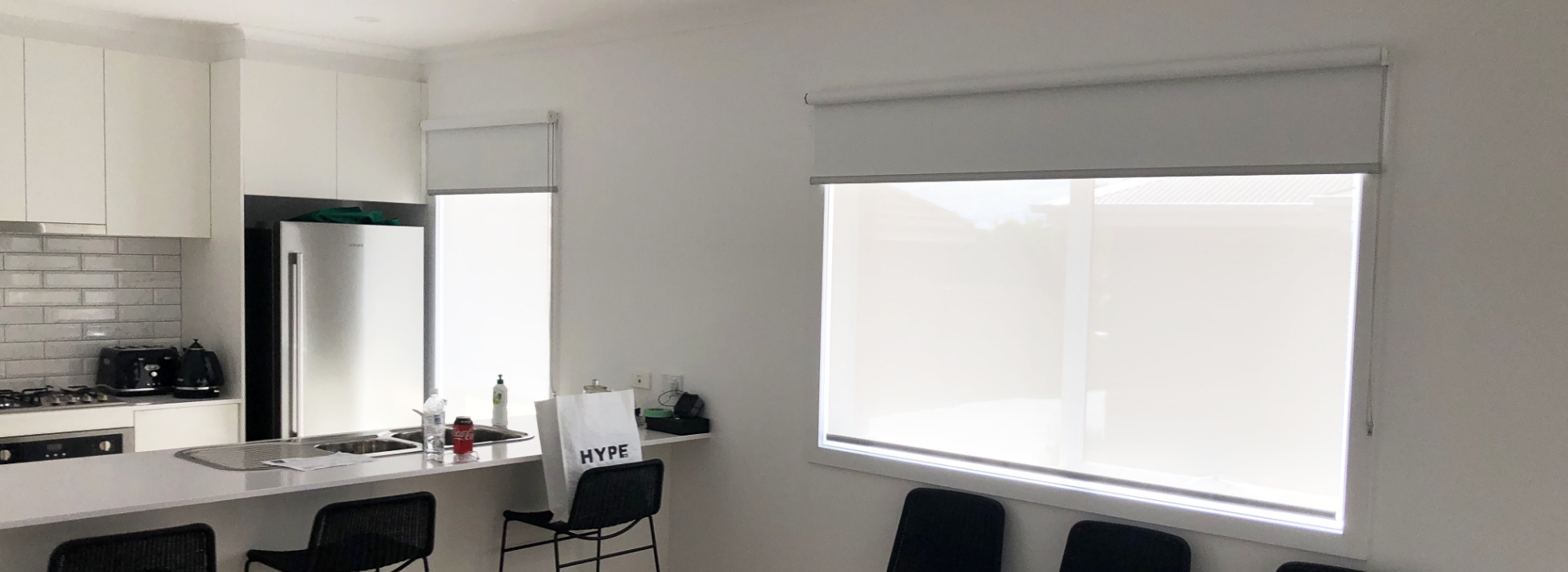
Bedroom
Blockout is essential — particularly for Melbourne summers when sunrise hits at 5:30am. Pair with a cassette system with side channels to eliminate edge light gaps completely.
Blockout + Side Channels
Living Room
Sunscreen (5–10% openness) for glare management without losing light. For west-facing rooms, drop to 3% or pair with a double roller for evening privacy.
Sunscreen 3–10%
Home Office
Screen glare is the enemy. A 3–5% sunscreen fabric perpendicular to your monitor reduces reflection while keeping the room feeling connected to the outside.
Sunscreen 3–5%
Bathroom
Choose a moisture-resistant or PVC-coated blockout fabric. Privacy is non-negotiable; consider a top-down mounting so you get light from the upper sash while staying covered below.
Blockout — Moisture ResistantAre Motorised Roller Blinds Worth It in Melbourne? (Honest Answer)
The honest answer is: yes, for the right situations. Motorised roller blinds aren’t a luxury product anymore — Somfy and similar motor systems have brought the technology into mainstream pricing, and the convenience genuinely changes how you interact with your home on a daily basis.
Motorisation makes the strongest case in these scenarios:
- High windows or stairwell glazing — if a window can’t be physically reached, motorisation is the only practical solution. A pull chain on a window 3 metres above the floor is unsafe; a wall switch or app control is not.
- Large windows with heavy blinds — wide, heavy roller blinds put strain on manual chain-and-bracket systems over time. A motor handles the load smoothly and extends the mechanism’s life.
- Smart home integration — Somfy’s RTS and TaHoma systems integrate with Google Home, Amazon Alexa, and Apple HomeKit, letting you control your blinds from an app, through voice, or on a scheduled timer tied to sunrise and sunset.
- Multiple blinds in one room — manually adjusting six individual roller blinds across a glazed living room wall every morning is tedious. One button raises or lowers the lot simultaneously.
One underrated benefit of motorised blinds in Melbourne is scheduling. Programme your blinds to lower on the western facade at 2pm during summer — before you get home — and you arrive to a house that’s significantly cooler than if the afternoon sun had been hitting the glass all day. On cold winter mornings, schedule the east-facing blinds to open at 7am, letting free solar heating warm the room before you’re up.
Blockout Roller Blind Cassettes and Side Channels: The Shift Worker’s Non-Negotiable
Standard roller blinds — even quality blockout fabrics — have one structural limitation: light gaps at the sides. The roller mechanism doesn’t seal against the window reveal on either side, which means light enters from the edges even when the blind is fully down. For most rooms this is acceptable. For bedrooms, nurseries, home theatres, and anyone who works night shifts and sleeps during daylight hours, it’s not.
Blockout roller blind cassettes with side channels solve this precisely. The cassette is a fully enclosed housing for the roller mechanism — eliminating the light bleed at the top of the blind where the tube is exposed. The side channels are aluminium or PVC rails that the blind fabric slides into as it lowers, sealing the left and right edges completely. The result is genuine pharmaceutical-grade darkness — the kind that makes a room feel like it could be 2am at midday.
If you’re outfitting a Melbourne home with young children, a shift-worker household, or a dedicated home cinema room, this is the specification to ask for. It adds to the overall cost of the blind, but the sleep quality and genuine light blockage it delivers is unmatched by any standard roller blind setup.
How Long Do Custom Roller Blinds Last in Melbourne’s Climate?
Melbourne’s climate is genuinely demanding on window furnishings. The combination of intense UV from January to March, cold and damp winters, the occasional hailstorm, and the infamous four-seasons-in-one-day swings between extremes creates conditions that accelerate the degradation of inferior products.
For quality custom roller blinds — meaning fabrics that meet Australian Standards for UV resistance and colorfastness, with purpose-engineered mechanisms — realistic lifespan benchmarks for Melbourne are:
| Product Type | Typical Lifespan | Key Factors |
|---|---|---|
| Quality custom sunscreen roller blind | 8–12 years | UV rating of fabric, direct sun exposure |
| Quality custom blockout roller blind | 10–15 years | Coating quality, moisture exposure in bathrooms |
| Double roller blind system | 8–12 years | Mechanism quality, frequency of use |
| Motorised roller blind (fabric) | 10–15 years | Motor quality separate from fabric lifespan |
| Budget retail roller blind | 2–5 years | Inferior UV treatment, thin fabrics, weak mechanisms |
The biggest determinant of longevity in Melbourne is UV exposure and fabric specification. Cheap roller blind fabrics aren’t treated to the same UV-resistance standards as commercial-grade custom fabrics — they fade, yellow, and lose structural integrity within a few Melbourne summers. Always ask your supplier for the fabric’s UV rating specification and whether it’s tested to Australian standards before purchasing.
What to Expect: The Custom Roller Blind Installation Process
Understanding the process from first inquiry to installed blind helps you plan realistically and avoid the frustration of unexpected delays. Here’s how a typical custom roller blind project runs with Alfresco Blinds Co.:
- Free In-Home Measure & Consultation (1–2 hours): Our team visits, takes precise measurements of every window, discusses fabric options and brings physical samples so you can see the fabrics in your home’s actual light conditions — not under showroom lighting.
- Quote & Order Confirmation: You receive a fixed written quote. Once confirmed, your blinds go into production — custom-made to your exact specifications.
- Manufacturing (2–5 weeks): Standard lead time for most custom roller blinds. Motorised systems or larger orders may extend to 5–7 weeks.
- Installation Day: Our installers arrive at the agreed time, fit all brackets and mechanisms, hang the blinds, and ensure every blind operates correctly before leaving. Most residential installs are completed within a half-day to full day.
- Post-Install Walkthrough: We demonstrate operation, clean up, and confirm you’re completely satisfied before we leave. Any adjustments needed are sorted on the spot.
Frequently Asked Questions About Custom Blinds in Melbourne
Beyond Roller Blinds: Building a Complete Home Shading Solution
Custom roller blinds handle your indoor window light brilliantly — but the most thermally efficient and liveable Melbourne homes layer indoor and outdoor shading together. Here’s how the product ecosystem connects:
- Ziptrak Outdoor Blinds — track-guided outdoor blinds that seal your alfresco area from wind, rain, and insects. Complement interior roller blinds on adjacent glazing to create a fully enclosed outdoor-indoor transition zone.
- Folding Arm Awnings — intercept solar heat before it reaches your glass, reducing the load on interior roller blinds and cutting solar gain significantly on north and west-facing walls.
- Motorised Outdoor Blinds — paired with interior motorised roller blinds on the same smart-home system, you get simultaneous indoor-outdoor control from a single app or voice command.
- Motorised Curtains — for bedrooms where you want the visual warmth of fabric curtains alongside a blockout roller blind behind, motorised curtain tracks deliver theatrical elegance with one-touch operation.
- Sunscreen Roller Blinds — explore the full range of sunscreen fabric options in varying openness factors and colourways.
At Alfresco Blinds Co., we regularly design whole-home shading solutions where every product — from outdoor Ziptrak blinds to interior blockout rollers to folding arm awnings on the alfresco — is specified and installed as a cohesive system. One supplier, one measure visit, one installation team. It simplifies the process and ensures everything works together visually and functionally.
Ready for Custom Blinds That Actually Fit Your Melbourne Home?
Get a no-obligation measure and quote from Melbourne’s trusted custom blind specialists. We’ll bring fabric samples, discuss your options room by room, and give you a fixed price on the day.
 Previous