 1300 735 077
Blinds Melbourne: The Complete2026 Buyer’s Guide
Alfresco Blinds Co
If you’ve lived in Melbourne long enough, you know the drill — it’s 30°C by noon, then a cool change rolls through at 4pm. Your home needs window coverings that can keep up. This guide covers every blind type available in 2026, what they cost, how they perform in Melbourne’s climate, and which options deliver the best energy savings. No fluff, just the good stuff.
Why Blinds Matter More in Melbourne Than Anywhere Else
Melbourne’s climate is, to put it politely, a handful. The Bureau of Meteorology records more days over 35°C than many other Australian capitals, and winter mornings in the outer suburbs can drop below 5°C. That swing puts enormous pressure on your home’s thermal envelope — and windows are the weakest link.
Research consistently shows that windows are responsible for up to 40% of a home’s heat gain and loss. Without proper window coverings, your reverse-cycle system is working overtime, your energy bills climb, and your living spaces swing from greenhouse to icebox. In Melbourne, that’s not a minor inconvenience — it’s a year-round reality.
The good news? The right blinds don’t just look bonzer — they actively regulate your home’s temperature, reduce noise from tram lines and traffic, provide privacy in terrace homes with close neighbours, and even protect your furniture and flooring from UV fade. It’s genuinely one of the most practical upgrades you can make to a Melbourne home.
Quick Facts on Energy Savings
The global blinds and shutters market reached USD $74.5 billion in 2026 and is forecast to grow to USD $151.5 billion by 2035, driven by smart home integration and energy efficiency mandates. Australian homeowners are right in the thick of this shift.
Types of Blinds: Which One’s Right for Your Home?
The Melbourne market in 2026 offers more choice than ever. Here’s a practical rundown of every major type, what they do best, and where they work hardest in a typical Melbourne home.
Roller Blinds
Melbourne’s everyday workhorse. Clean, minimal, available in sunscreen, blackout, or thermal fabrics. Perfect for apartments and open-plan living.
Roman Blinds
The number one design trend for 2026. Soft fabric folds create warmth and texture — beautiful in dining rooms and bedrooms.
Plantation Shutters
A Melbourne classic, especially in heritage Edwardian and Victorian homes. Outstanding insulation, long lifespan, and adds property value.
Honeycomb / Cellular Blinds
The top performer for thermal insulation. Hexagonal air pockets trap heat in winter and cool air in summer. Ideal for west-facing rooms.
Sheer Curtains & Sheers
S-fold and wave-fold sheers are having a major moment in 2026. Soft light diffusion, privacy, and a beautifully relaxed aesthetic.
Blockout Roller Blinds
Total darkness, total privacy. Essential for Melbourne bedrooms, shift workers, and home theatres. Now available with motorised operation.
Energy Efficiency: How Blinds Cut Your Bills
Here’s something most Melbourne homeowners underestimate — your windows are the biggest source of heat gain in summer and heat loss in winter. Glass has a very low insulation value (R-value), which means solar energy passes straight through it and bakes your living room on a February afternoon.
The right blinds act as a thermal buffer. Sunscreen roller blinds alone can block up to 95% of UV rays while still letting diffused light through. Insulated blockout blinds reduce heat loss through windows by up to 30% in winter. And if you go motorised and set automated schedules, savings of up to 30% on cooling costs are achievable.
Choosing by Window Direction
Not all windows are the same, and in Melbourne, which direction your windows face makes a massive difference to which blind will work hardest for you. Here’s the quick guide.
North
Get the most consistent sun year-round. Great for warmth in winter — use sunscreen blinds that let winter sun in but block UV. Consider lighter fabric colours to reflect summer heat.
South
Little direct sunlight but can be cold in winter. Insulated or honeycomb blinds are your best friend here — trap warmth without blocking what little natural light you do get.
West
Melbourne’s problem child. Afternoon sun is brutal. Blockout or honeycomb blinds are non-negotiable. External blinds or awnings are even better — they stop heat before it hits the glass.
East
Morning sun only. Pleasant in winter, manageable in summer. Sunscreen rollers or sheers work well — enjoy the morning light without sacrificing privacy or comfort.
Outdoor Blinds & Patio Awnings
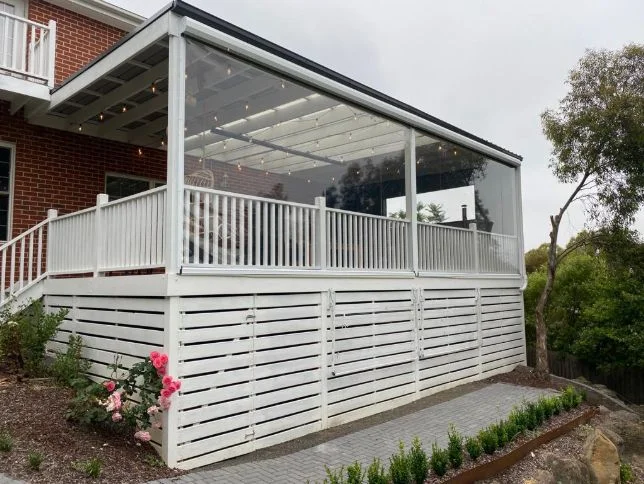
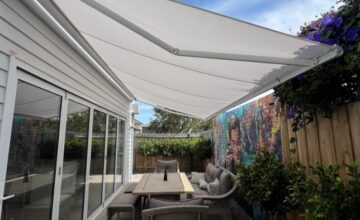
Melbourne’s love affair with alfresco living is stronger than ever in 2026. Whether it’s a Ziptrak system on your north-facing pergola, folding arm awnings over a Toorak courtyard, or café bistro blinds on an Epping patio — outdoor blinds are one of the fastest-growing categories in the Melbourne market.
And there’s a very practical reason beyond aesthetics: outdoor blinds stop heat before it ever reaches your glass. External shading can reduce solar heat gain by up to 45% — considerably more effective than any internal blind. That’s because once sunlight passes through the glass, the heat is already in your home. Stop it at the source.
| Product | Wind Rating | Privacy | Motorised Option | Best For |
|---|---|---|---|---|
| Ziptrak Blinds | Excellent | Full | Yes | Year-round alfresco enclosure |
| Folding Arm Awnings | Moderate | Shade only | Yes | North/west sun protection for decks |
| Café / Bistro Blinds | Good | Full (PVC) | Manual only | Balconies, restaurants, verandahs |
| eZip / Zipscreen | Excellent | Full | Yes | Large openings, commercial use |
| Roller Outdoor Blinds | Fair | Partial | Yes | Budget-conscious shade solutions |
Motorised & Smart Blinds in 2026
Smart blinds are no longer just a luxury add-on for fancy homes in Brighton or Toorak. In 2026, they’ve gone mainstream — and for good reason. The automated blinds and shades market is expected to reach USD $5.72 billion globally by 2030, growing at over 6% per year, driven largely by smart home adoption and energy efficiency regulations.
In Melbourne specifically, where energy prices have continued to rise and the climate swings wildly, automated blinds deliver real, measurable value. Set your blinds to close automatically when your west-facing living room hits 28°C. Have them open gently with the sunrise. Tie them to your Google Home or Amazon Alexa ecosystem. The convenience is real, and so are the savings.
The 2026 standard for smart blind integration is the Matter protocol — a universal language that lets your blinds communicate with smart speakers, thermostats, and other devices regardless of brand. When choosing motorised blinds, look for motors compatible with this standard, as it future-proofs your investment considerably.
What Do Blinds Cost in Melbourne? (2026 Pricing Guide)
Fair question, and one we’re happy to answer honestly. Blind pricing in Melbourne varies quite a bit depending on the type, fabric, size, and whether you go custom or off-the-shelf. Here’s what you can realistically expect to pay in 2026, supply and install included.
Roller Blinds
- ✔ Sunscreen, blockout or thermal fabrics
- ✔ Dual roller option available
- ✔ Motorised add-on from ~$150 extra
Outdoor Ziptrak Blinds
- ✔ Motorised option included
- ✔ Wind-resistant track system
- ✔ Full outdoor enclosure possible
Plantation Shutters
- ✔ PVC, Basswood & Poplar options
- ✔ Adds property resale value
- ✔ 10–20 year lifespan typical
Folding Arm Awnings
- ✔ Motorised as standard
- ✔ Wind sensor option available
- ✔ Various projection sizes
Roman Blinds
- ✔ Wide fabric selection
- ✔ Custom lining options
- ✔ Motorised option available
Honeycomb Blinds
- ✔ Best thermal performance
- ✔ Single & double cell options
- ✔ Motorised option available
2026 Design Trends Melbourne Homeowners Are Loving
The window furnishings industry moves faster than most people realise. Here’s what’s genuinely trending in Melbourne homes right now, as of April 2026 — and why each trend makes practical sense beyond just looking good.
Roman Blinds are Having a Moment
Named the number one window trend for 2026 by The Spruce. Warm, textured, and structured — they hit the sweet spot between soft furnishings and functional blinds. Particularly popular in Melbourne heritage homes.
Smart & Motorised Automation
No longer a novelty. In 2026, smart blinds compatible with Google Home and Alexa are a baseline expectation for new Melbourne builds and renovations. Matter protocol integration is the new standard.
Natural Textures & Earthy Tones
Linen fabrics, woven textures, and organic materials. Colour palettes are shifting to warm greys, stone, sand, taupe and muted greens — perfectly suited to Melbourne’s timber deck and native garden aesthetic.
Indoor–Outdoor Living Integration
Alfresco living is stronger than ever. Outdoor blinds that create seamless transitions between inside and outside — especially Ziptrak systems that enclose a pergola completely — are flying out the door.
Eco-Conscious Materials
Homeowners are choosing blinds with better UV resistance, higher fade resistance, and recyclable materials. Durability and environmental impact are now part of the buying decision.
Sheer & S-Fold Curtains
S-fold and wave-fold sheers are bringing a relaxed, resort-like feel to Melbourne living rooms and main bedrooms. Floor-to-ceiling sheers in translucent fabrics are consistently one of our most-requested finishes.
 Previous

Follow Us on Instagram
