
 1300 735 077
Holland Blinds Explained: What Every Melbourne Homeowner Must Know in 2026
Alfresco Blinds Co
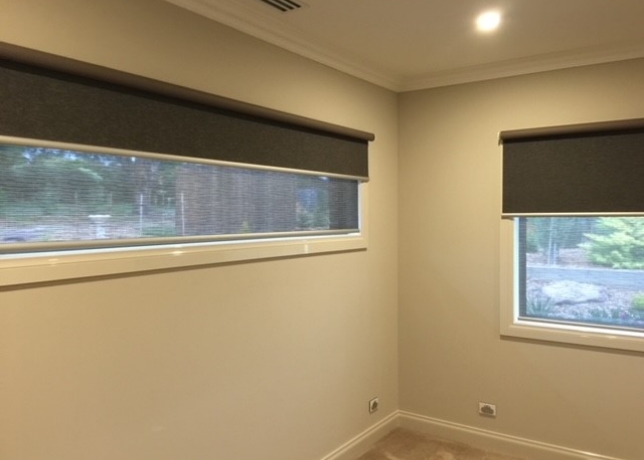
Holland blinds have quietly shaped the look of Melbourne windows for well over a century. Today, many homeowners searching for roller blinds in Melbourne are unknowingly looking for exactly the same product under a different name. A Holland blind is a flat fabric blind that winds onto a horizontal tube above the window. It is simple, versatile, and remarkably effective. Furthermore, modern versions now include motorisation, smart home integration, blockout fabrics, and wire-guided tracking systems that the original design never imagined.
Whether you are renovating a Federation-era home in Fitzroy, designing a new build in Epping, or simply replacing tired curtains in a Melbourne apartment, understanding Holland blinds in full detail will save you time, money, and frustration. This guide covers everything honestly and clearly.
What Are Holland Blinds, Exactly?
The term Holland blind has roots in 17th-century Europe. Specifically, it originally described a plain-woven cotton or linen fabric called Holland cloth, produced commercially in the Netherlands. According to Wikipedia’s entry on Holland fabric, this tightly woven textile became popular for household furnishings across Britain and its colonies, including Australia. Window blinds made from this material took the name naturally.
Over time, the fabric changed considerably. However, the name Holland blind remained embedded in Australian household vocabulary. Today, the mechanism is the same: a fabric panel rolls and unrolls around a spring-loaded or motor-driven tube mounted at the top of a window. The result is a clean, flat blind that moves up and down smoothly with minimal effort.
Mechanically, Holland blinds use one of two operating systems: a chain-and-sprocket mechanism or a spring-loaded clutch. Modern versions additionally include motorised tube systems compatible with smart home platforms. Therefore, the product that your grandparents called a Holland blind is now also the motorised roller blind that smart home enthusiasts install via an app on their phone.
Holland Blinds vs Roller Blinds: Is There a Real Difference?
This question generates genuine confusion across Melbourne renovation forums and among homeowners shopping for window coverings. The honest answer is that Holland blinds and roller blinds describe the same product. The difference is purely generational and regional in terminology. Older Australians and some trade suppliers still use Holland blind. Meanwhile, most retailers, manufacturers, and interior designers use roller blind as the standard contemporary term.
Holland Blind
- Traditional Australian term
- Rooted in 20th-century industry vocabulary
- Still used by heritage home specialists
- Same mechanism as roller blinds
- Often associated with plain or neutral fabric styles
- Chain or spring-operated
Roller Blind
- Contemporary industry standard term
- Used by most Melbourne retailers today
- Wider fabric range available
- Same mechanism as Holland blinds
- Compatible with motorisation and automation
- Chain, spring, or motorised operation
Importantly, some suppliers do draw a subtle distinction. They argue that a traditional Holland blind uses a specific type of lightly starched or treated fabric with a stiffer hand feel, compared to modern roller blind fabrics. However, this distinction rarely affects the buying decision for most Melbourne homeowners in 2026. Both products install identically, operate identically, and take the same fabric types.
“A Holland blind is simply the Australian name most people over 50 use when they mean a roller blind. The product itself has not fundamentally changed in 80 years — only the fabrics and operating mechanisms have evolved significantly.”
For practical purposes, when you contact a Melbourne blind supplier and ask for Holland blinds, they will show you their roller blind range. This is entirely correct. Explore the full roller blinds collection at Alfresco Blinds Co to see the current range available across Melbourne.
Fabric Types for Holland Blinds in Melbourne: From Sunscreen to Blockout
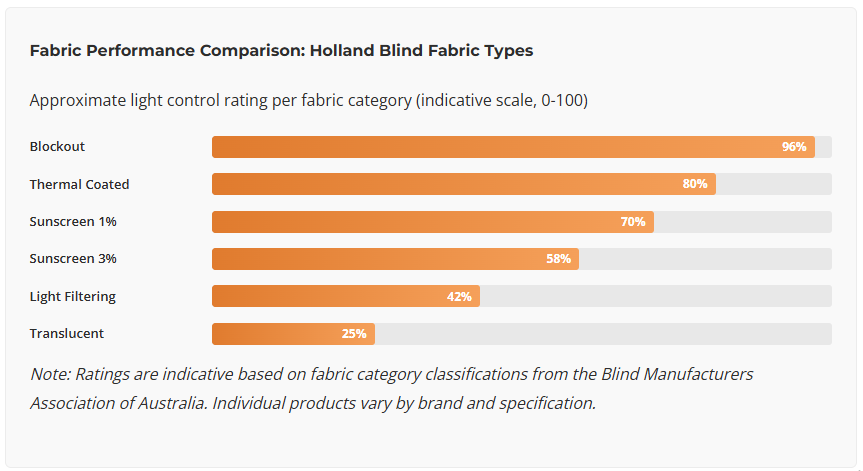
Fabric selection is the most consequential decision you will make when choosing Holland blinds. The fabric determines privacy, light filtering, glare control, heat management, and the overall aesthetic of the finished blind. Melbourne homes face a wide range of conditions throughout the year, from harsh summer UV exposure to cold, grey winter mornings. Consequently, fabric choice significantly affects daily comfort.
Sunscreen Fabric
Filters glare while maintaining an outward view. Ideal for living rooms and home offices facing sun.
Light Filtering
Softens natural light without full blockout. Suits bedrooms and dining rooms needing privacy with ambient glow.
Blockout Fabric
Eliminates virtually all incoming light. Essential for shift workers, nurseries, and media rooms.
Translucent Fabric
Diffuses light gently across the room. Provides daytime privacy without darkening the space.
Linen-Look Fabric
Textured appearance suited to period homes. Natural tones complement Federation and Edwardian interiors.
Thermal Coated
Reflective backing reduces heat transfer. Supports energy efficiency in Melbourne’s variable climate.
Understanding Openness Factor in Sunscreen Holland Blinds
Sunscreen fabrics carry an openness factor rating expressed as a percentage. This figure measures the size of the gaps between woven fibres. A lower openness factor means tighter weaving, which blocks more UV and heat. Consequently, it also reduces your outward view slightly. A higher openness factor allows more light and airflow but offers less privacy at night when interior lights are on.
Verified Fact – Openness Factor Guide
1% openness: Maximum UV and heat block. Minimal view-through. Best for west-facing Melbourne windows with afternoon sun exposure.
3% openness: Strong glare control with a clearer outward view. Popular for living rooms and home offices.
5% to 10% openness: Good for light filtering with natural airflow. Best for south-facing rooms or shaded positions.
Source: Blind Manufacturers Association of Australia (BMAA) fabric classification guidelines
Blockout Holland blinds use a fabric with a solid coating on the reverse side, typically acrylic or foam-backed. This coating eliminates light transmission. However, it is worth noting that even blockout fabric still allows light to enter around the blind edges unless wire guides or side channels are fitted. For complete room darkness, a reveal-mounted blockout Holland blind with wire guides is the most effective solution in a standard Melbourne window.
Thermal-coated fabrics carry an additional benefit that is particularly relevant to Melbourne homeowners. According to the Australian Government’s Department of Climate Change, Energy, the Environment and Water, window coverings with reflective backing can reduce heat gain through glass by a significant margin, lowering air conditioning demand during summer. This directly translates to reduced energy bills.
Motorised Holland Blinds: Smart Home Integration in Melbourne
Motorisation has fundamentally changed how Melbourne homeowners interact with Holland blinds. Previously, operating a blind meant physically pulling a chain or releasing a spring clutch. Today, a motorised Holland blind responds to a smartphone app, a wall switch, a voice command via Google Home or Amazon Alexa, or an automated schedule set to the Melbourne sunrise and sunset times.
The motor sits inside the roller tube. Because of this internal placement, motorised Holland blinds look identical to standard blinds from the outside. There are no visible cables, no battery packs hanging visibly, and no wall transformers cluttering the sill. The clean aesthetic that makes Holland blinds popular remains completely intact.
Motor Types Currently Available in Melbourne
Melbourne blind installers typically offer two primary motor types for Holland roller blinds: hardwired 240V motors and rechargeable battery motors. Each has distinct practical advantages depending on the property and renovation context.
- Hardwired 240V motors: Permanent, reliable power. Best for new builds or full renovations where an electrician is already on site. No recharging required.
- Rechargeable battery motors: No wiring required. Ideal for rental properties, existing homes, or heritage buildings. Recharging typically occurs every 6 to 18 months depending on usage and motor brand.
- Solar-powered motors: A solar panel on the window or sill trickle-charges the battery continuously. Particularly effective for north and west-facing Melbourne windows with strong sun exposure.
Smart integration tip: Motorised Holland blinds from brands like Somfy and Rollease Acmeda integrate directly with Apple HomeKit, Google Home, and Amazon Alexa. You can group multiple blinds across an entire Melbourne home and control them all simultaneously from a single app.
Discover the full motorised blinds range available at Alfresco Blinds Co’s motorised blinds page. The team provides measure and quote services across Melbourne, including advice on which motor type best suits your home’s wiring situation.
Installation Methods for Holland Roller Blinds in Melbourne Homes
How a Holland blind is installed significantly affects its performance and visual outcome. Melbourne homes vary enormously in window construction, from narrow double-hung timber frames in heritage suburbs to wide aluminium-framed openings in contemporary builds. Therefore, installation must be chosen to suit the specific window rather than applied as a one-size solution.
Inside-Mount (Recess) Installation
An inside-mount blind fits within the window reveal. This creates a clean, built-in appearance with no bracket exposed beyond the frame. However, this method requires adequate depth inside the reveal for the roller tube and brackets. Additionally, slight light gaps appear around the edges unless wire guides are fitted. This method suits most modern Melbourne window constructions well.
Outside-Mount (Face-Fix) Installation
An outside-mount blind fixes to the wall or architrave above and beyond the window opening. Because it covers more surface area, it more effectively blocks light around the edges. This method also visually increases the apparent height of the window, which suits older Melbourne homes with low ceilings. Furthermore, it works well when the window reveal depth is insufficient for a recess mount.
Side-Channel Systems for Light Elimination
For complete room darkness, standard roller blinds can be upgraded with side-channel tracks and a top cassette/pelmet. The fabric edges ride securely inside these solid side channels, completely sealing the edges against light halos. This combination is highly recommended for Melbourne nurseries, home theatres, and shift workers who require absolute daytime blackouts.
Installation Tip – Verified by Industry Practice
For blockout performance in Melbourne bedrooms, the Australian window furnishing industry recommends combining a blockout-rated fabric with an outside-mount installation and side-channel wire guides. This combination minimises light gaps on all four edges of the blind.Source: Window Furnishing Australia (WFA) – Installation guidelines
Child Safety and Chain-Free Options for Holland Blinds
Blind cord and chain safety is a genuine and serious concern for Melbourne families with young children or pets. Looped operating chains create a strangulation hazard. The Australian Competition and Consumer Commission (ACCC) has issued specific safety warnings regarding looped cords and chains on window blinds in Australian homes.
In response, the blind industry in Australia has moved significantly towards safer alternatives. Moreover, Australian Standards AS/NZS 2588:2020 sets mandatory requirements for blind cord and chain safety in residential settings. Any Holland blind purchased from a reputable Melbourne supplier in 2026 must comply with these standards.
Safe Operating Options for Melbourne Family Homes
- Cordless spring-lift systems: The blind raises and lowers by pressing the bottom rail upward or pulling it downward. There is no chain or cord whatsoever. This is the safest manual option for homes with young children.
- Motorised operation: Completely eliminates chains and cords. Controlled via wall switch, remote, or app. This is the gold-standard safety option for family homes.
- Chain tensioners and tie-downs: If a chain mechanism is chosen, a fixed anchor point keeps the looped chain taut against the wall, preventing it from hanging freely. This significantly reduces risk but does not eliminate it entirely.
Alfresco Blinds Co recommendation: For any Melbourne home with children under 10, we strongly recommend cordless or motorised Holland blinds. The team can advise on the most practical option for your budget and window type during your free measure and quote.
Holland Blinds in Melbourne Period and Heritage Homes
Melbourne’s inner suburbs contain some of Australia’s finest examples of Federation, Edwardian, Victorian, and Californian Bungalow-era residential architecture. Fitzroy, Carlton, Brunswick, Hawthorn, Kew, and Malvern are filled with period homes where authentic and complementary interior choices matter enormously. Holland blinds, with their flat fabric profile and understated design, have always suited these environments well.
Traditional-look Holland blinds in natural linen-look fabrics, warm neutrals, or soft ivories complement pressed metal ceilings, timber sash windows, ornate architraves, and Baltic pine floors. Additionally, the slim roller tube sits discreetly at the top of the window recess, unlike the bulky pelmet boxes or elaborate curtain arrangements that can look forced in heritage interiors.
Furthermore, for homes listed on the Victorian Heritage Register or subject to Heritage Overlay provisions under the Melbourne Planning Scheme, window furnishings that mount inside the window reveal and do not alter the external facade are generally suitable without requiring a planning permit. However, always confirm with your local Melbourne council for specific guidance on your property’s heritage controls.
If you are working on a period Melbourne home and need advice on heritage-appropriate blind styles, the team at Alfresco Blinds Co’s plantation shutters range and Holland-style roller blinds offer complementary options for these sensitive environments.
Holland Blinds Pricing in Melbourne: What to Expect in Mid-2026
Pricing for Holland blinds in Melbourne varies depending on fabric type, blind size, operating mechanism, and installation method. Below is a general indicative guide based on current mid-2026 market conditions. Always request a personalised measure and quote from your Melbourne supplier, as individual window dimensions, fabric specifications, and installation requirements significantly affect final cost.
Disclaimer: Prices below are indicative estimates only, relevant to mid-2026 Melbourne market conditions. Actual pricing depends on window dimensions, fabric selection, operating system, and installer rates. Prices are subject to change. Request a formal quote for accurate pricing.
Standard Manual
Holland Blind
$150 – $280
Per blind, installed. Sunscreen or light filtering fabric. Chain or spring-lift operation. Standard Melbourne window size.
Blockout Holland
Blind with Side Channels
$250 – $420
Per blind, installed. Premium blockout fabric with a matching pelmet and side tracks to trap light.
Motorised Holland
Blind
$450 – $900+
Per blind, installed. Includes motor, remote, and smart home integration. Price varies with motor type and brand.
Source: Indicative mid-2026 price ranges based on general Melbourne window furnishing market conditions. No specific supplier pricing data is guaranteed or implied. Always obtain a written quote before committing to purchase.
For accurate, obligation-free pricing specific to your Melbourne home, contact Alfresco Blinds Co to book a measure and quote. The team services all Melbourne suburbs from the Epping showroom.
Maintaining Holland Blinds: Keeping Them Looking Sharp
Holland blinds are among the lowest-maintenance window furnishings available for Melbourne homes. Their flat, woven fabric surface resists dust accumulation far better than layered curtains or louvred shutters. Nevertheless, regular light maintenance extends the fabric life and keeps the mechanism operating smoothly.
Regular Dusting and Vacuuming
Use a soft brush attachment on a vacuum cleaner to remove dust from the fabric surface. Work from top to bottom in gentle parallel strokes. Do this monthly in high-dust Melbourne environments, particularly near busy roads or during summer when windows are open more frequently. This simple step prevents dust from embedding in the fabric weave and becoming harder to remove.
Spot Cleaning for Stains
For marks or stains, use a clean damp cloth with a small amount of mild, pH-neutral detergent. Blot the stain gently rather than rubbing. Rubbing can spread the stain and damage the fabric coating, particularly on blockout and thermal-backed Holland blinds. Always test the cleaning solution on a small, hidden area of the fabric first before treating a visible stain.
Mechanism Care
The roller tube and chain mechanism require almost no maintenance in normal residential use. However, if a chain-operated blind starts to feel stiff or skip, a light application of silicone-based spray lubricant on the sprocket can help. Avoid petroleum-based lubricants, which can drip onto and stain the fabric below. Motorised blinds require even less attention, as the electronic motor operates maintenance-free under normal residential conditions.
For a deeper clean that goes beyond regular maintenance, professional blind cleaning services operate across Melbourne. Several offer an in-home ultrasonic cleaning service that removes embedded dust, allergens, and marks without removing the blinds from the window. This is particularly useful for allergy sufferers, as roller blind fabrics can accumulate dust mite particulates over time.
If you also have outdoor blinds or awnings alongside your Holland blinds, the outdoor blinds range at Alfresco Blinds Co includes products designed to handle Melbourne’s harsher exterior conditions with minimal maintenance requirements.
Frequently Asked Questions About Holland Blinds in Melbourne
What is the actual difference between Holland blinds and roller blinds?
Holland blinds and roller blinds refer to the same product. The name Holland blind is the traditional Australian term derived from Holland cloth, the original fabric used. Modern retailers use roller blind as the standard term. Both products use an identical mechanism: fabric that winds onto a horizontal tube above the window.
Are Holland blinds still made in 2026, or have they been fully renamed?
The product absolutely still exists and is widely available in Melbourne in 2026. Most manufacturers market them as roller blinds today. However, some heritage-focused and trade suppliers retain the Holland blind terminology. Functionally, there is no difference between a product called a Holland blind and one called a roller blind.
Why do older Australians still call roller blinds Holland blinds?
The name Holland blind entered Australian household vocabulary during the early 20th century, when Holland cloth from the Netherlands was the standard fabric material for window blinds. As Australian home building expanded through the mid-century, the name became deeply embedded in everyday language. Subsequent generations of Australians learned the term from their parents, and it persisted long after the original fabric fell out of use.
Can Holland blinds be motorised like modern roller blinds?
Yes, fully. Motorised Holland blinds use exactly the same motors as motorised roller blinds. Systems from Somfy, Rollease Acmeda, Automate, and other brands fit inside the roller tube and connect to smart home platforms including Apple HomeKit, Google Home, and Amazon Alexa. Motorisation is available for both new installations and retrofitting existing manually operated blinds in many cases.
Are Holland blinds effective for blocking out light for shift workers?
Blockout Holland blinds with an outside-mount installation and side channels provide excellent light elimination. For a Melbourne shift worker needing complete daytime darkness, this combination delivers the best result within a standard roller blind format. Combining blockout fabric with a side-channel tracking system and a top pelmet completely eliminates the residual light halos around the edges of the window frame
What is the average cost of Holland blinds installed in Melbourne?
As a general guide for mid-2026, standard manually operated Holland blinds in Melbourne cost approximately $150 to $280 per blind installed. Premium blockout versions with side-channel tracks typically range from $250 to $420 per blind. Motorised Holland blinds start from around $450 per blind installed. These are indicative estimates only. Pricing varies with window size, fabric, and installation specifics. Always obtain a formal written quote.
Do Holland blinds suit a weatherboard or Federation-style Melbourne home?
Absolutely yes. Holland blinds in linen-look or natural textured fabrics are among the most sympathetic window furnishing choices for period Melbourne homes. Their clean profile sits within the window reveal without competing with heritage architraves, ornate cornices, or timber sash frames. Neutral warm tones in ivory, flax, or stone complement the colour palettes typical of Federation and Edwardian interiors.
Are chain-operated Holland blinds safe around young children or pets?
Chain-operated Holland blinds with a looped chain carry a documented strangulation risk for young children. The ACCC has issued formal safety warnings on this matter. In Australian homes with children under 10 or mobile pets, the industry recommends cordless spring-lift systems or motorised operation. If a chain blind is used, a tensioned chain anchor must be fitted to the wall or window frame to prevent free-hanging loops. Check ACCC safety guidance at accc.gov.au for current Australian requirements.
How do you clean and maintain fabric Holland blinds?
Monthly vacuuming with a soft brush attachment removes surface dust effectively. Spot-clean stains with a damp cloth and mild pH-neutral detergent, blotting rather than rubbing. Do not machine wash or soak the fabric. Avoid petroleum-based products near the mechanism. For a thorough clean, Melbourne-based professional blind cleaning services offer ultrasonic or in-home wet cleaning without removing the blind from the window.
Where can I still buy genuine Holland blinds in Melbourne?
Alfresco Blinds Co supplies and installs Holland-style roller blinds across all Melbourne suburbs. The showroom is located at 15/5 Scanlon Dr, Epping VIC 3076. Call 1300 735 077 or email info@alfrescoblindsco.com.au to book a free in-home measure and quote. Hours are Monday to Friday, 9:00 AM to 4:30 PM, and Saturday by appointment.
What openness factor should I choose for sunscreen Holland blinds?
For west and north-facing Melbourne windows that receive strong afternoon or midday sun, a 1% to 3% openness factor provides the strongest UV and heat control while retaining an outward view. For south-facing or shaded rooms where glare is less of an issue, a 5% to 10% openness factor suits the space better by allowing more natural light diffusion.
How long do Holland blind fabrics typically last in Melbourne conditions?
Quality Holland blind fabrics from reputable Australian suppliers typically perform well for 7 to 15 years. UV-stabilised and acrylic-coated fabrics last toward the upper end of this range. Because Melbourne’s hot summers cause faster fading in sun-facing rooms, choosing a premium supplier is essential. For instance, Alfresco Blinds Co provides a robust 5-year warranty on their indoor blinds, ensuring your investment is fully protected against early material failure.
Can I retrofit motorisation to an existing Holland blind?
In many cases, yes. Rechargeable battery motors from brands like Somfy and Rollease Acmeda can be retrofitted into existing roller blind tubes if the tube diameter is compatible. A qualified Melbourne blind installer can assess your existing blind and confirm whether retrofitting is feasible before committing to replacement.
Final Thoughts: Holland Blinds Remain a Smart Choice for Melbourne Homes
After more than a century in Australian homes, Holland blinds endure because they work. Their clean, flat profile suits every architectural era from Victorian terrace to contemporary new build. Modern fabric technology means you can now choose from blockout layers, sunscreen weaves, thermal coatings, and linen-look textures, all on the same simple mechanism that has proven reliable for generations.
Furthermore, motorisation has genuinely transformed how Melbourne homeowners use these blinds. Scheduling your Holland blinds to close automatically as the afternoon sun strikes the western elevation is no longer a luxury. It is a practical energy-saving measure that any homeowner can implement through a straightforward smart home integration.
Whether you are after a simple chain-operated blockout blind for a Melbourne bedroom, a motorised sunscreen blind for a north-facing living room, or historically appropriate linen-look blinds for a Federation home in Kew, the right Holland blind exists for your situation. The key is matching fabric, mechanism, and installation method to the specific needs of each room and window.
At Alfresco Blinds Co, the team brings years of Melbourne window furnishing experience to every measure and quote. They supply and install Holland blinds alongside the full range including roller blinds, motorised blinds, outdoor blinds, awnings, plantation shutters, and curtains and drapes.
 Previous

Follow Us on Instagram
